


AleaSoft Energy Forecasting, November 13, 2026. Battery storage in Spain could grow from around 300 MW today to between 6 and 8 GW in 2030, according to AEPIBAL. Investor interest is high, but permitting, grid connection and the profitability of each project will set the pace. In the view of AleaSoft, arbitrage will be the basis of long-term revenues, and estimating them requires simulating battery operation on price forecasts.
Strong investor interest and little capacity in operation
On November 12, AleaSoft Energy Forecasting held its 71st webinar, whose Spanish session featured Luis Marquina de Soto, president of the Spanish Business Association of Batteries and Energy Storage (AEPIBAL).
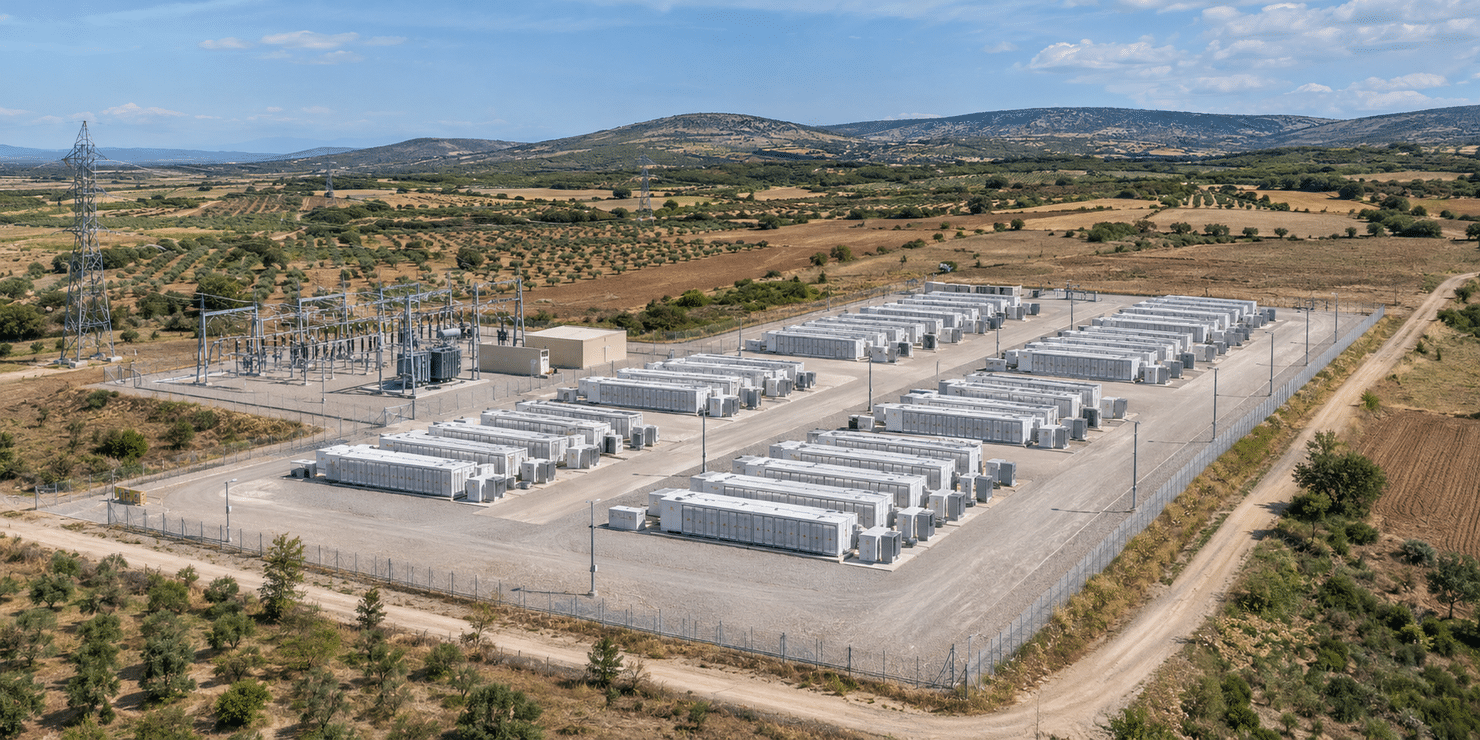
Spain has around 300 MW of battery storage in operation, and AEPIBAL expects this figure to double before the end of 2026. Access and connection applications for stand‑alone and hybridised projects total close to 37 GW. For 2030, AEPIBAL considers scenarios of between 3.5 and 8 GW, with a central scenario of 6 to 8 GW and around 17.5 GWh of storage capacity.
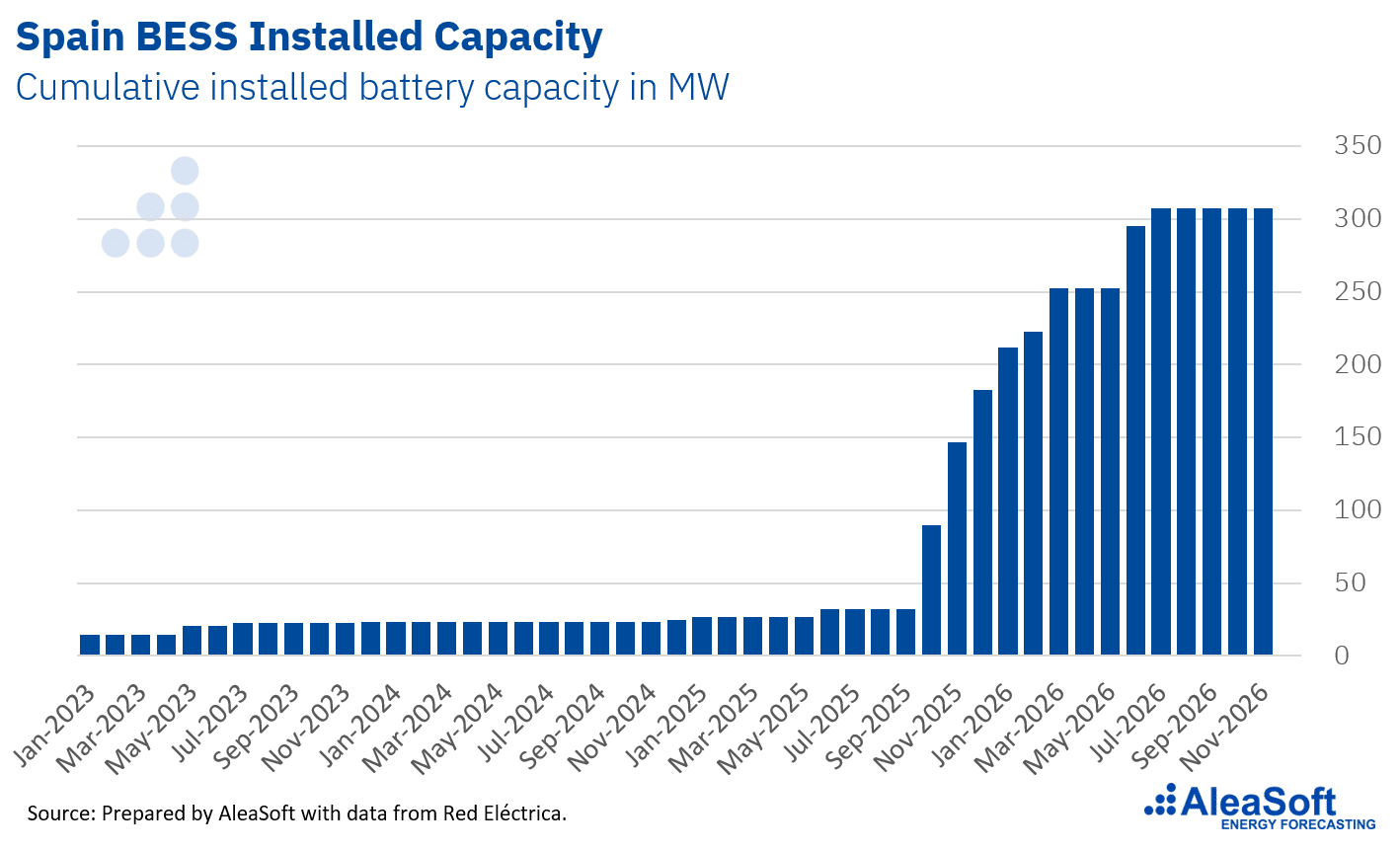
The Red Eléctrica data presented by AleaSoft Energy Forecasting show that deployment has already accelerated. Installed battery capacity remained below 35 MW until September 2025 and has since grown rapidly to reach 306 MW. As these data are published with some delay, actual capacity in recent months could be somewhat higher.
Luis Marquina warned that the capacity requested or with access granted does not equate to megawatts that will actually be built. The market is sending good signals and, although some developers need financing, most have the financial capacity to develop their projects. For owners of photovoltaic plants, hybridisation with batteries is an imminent need.
Permitting, commissioning and safety
Deployment will depend on social and environmental permitting, access to grid connection and a detailed profitability analysis. According to Marquina, some developers do not assess locations well or manage the social acceptance of their projects properly. With a regulatory framework that is now clearer, the sector’s concerns focus on construction, on the permits linked to facility safety and on commissioning, since connecting a storage plant to a distribution company is complex due to the lack of protocols.
The fall in the solar captured price drives storage
For AEPIBAL, the cannibalisation of photovoltaic prices is the main entry route for storage. According to the data presented by the association, the average spread in 2026 stands at €103/MWh and the hours with prices that are zero, negative or below €4/MWh are approaching 1200 per year. Marquina stressed that these spreads reflect inefficiencies in the system that will need to be corrected.
The association considers hybridisation attractive even without charging from the grid, because it speeds up permitting and makes it possible to capture the spread, with somewhat lower revenues from balancing services. According to Marquina, with solar captured prices of around €40/MWh batteries are important, below €30/MWh they are necessary and below €25/MWh they are the only option to sustain the plant’s profitability.
Revenues will change as capacity grows
AEPIBAL expects balancing services, currently the main source of revenue, to be cannibalised quickly, as they are a market of between 1 and 2 GWh. Arbitrage will be the structural floor, with spreads that the association projects above €80/MWh for at least ten years. The capacity market, which it expects from 2027, and tolling agreements will provide certain revenues that will determine the volume of debt. Marquina insisted that the growth of batteries must be accompanied by more demand, more renewable generation and more flexibility.
Simulating battery operation to invest wisely: the role of AleaStorage
In the view of AleaSoft Energy Forecasting, these will be the years of batteries as the fastest-growing technology. Its forecasts agree with AEPIBAL that arbitrage in the day-ahead market and the intraday market will be the basis of long-term revenues, with balancing services as additional revenue in the early years and the capacity market as contracted revenue that will support bankability. The revenues of a battery are not obtained by multiplying spread by cycles, because they depend on the operating strategy, hourly price profiles and degradation. For this reason, they must be estimated by simulating battery operation on long-term hourly price simulations.
AleaStorage, the AleaSoft Energy Forecasting division specialising in energy storage, estimates the revenues, IRR and payback of stand‑alone batteries and of projects hybridised with renewables in arbitrage, balancing services and the capacity market. Its new online platform AleaBattery simulates hourly battery operation over 20 years on more than 1000 price simulations.
Source: AleaSoft Energy Forecasting