


AleaSoft Energy Forecasting, April 14, 2026. Industry is transforming the way it manages energy. Self‑consumption, combined with storage, is no longer merely a cost‑saving tool but is becoming a strategic asset. Price‑driven optimisation, participation in flexibility markets and the use of advanced forecasting position energy as a key competitiveness factor in an increasingly renewable and volatile electricity system.
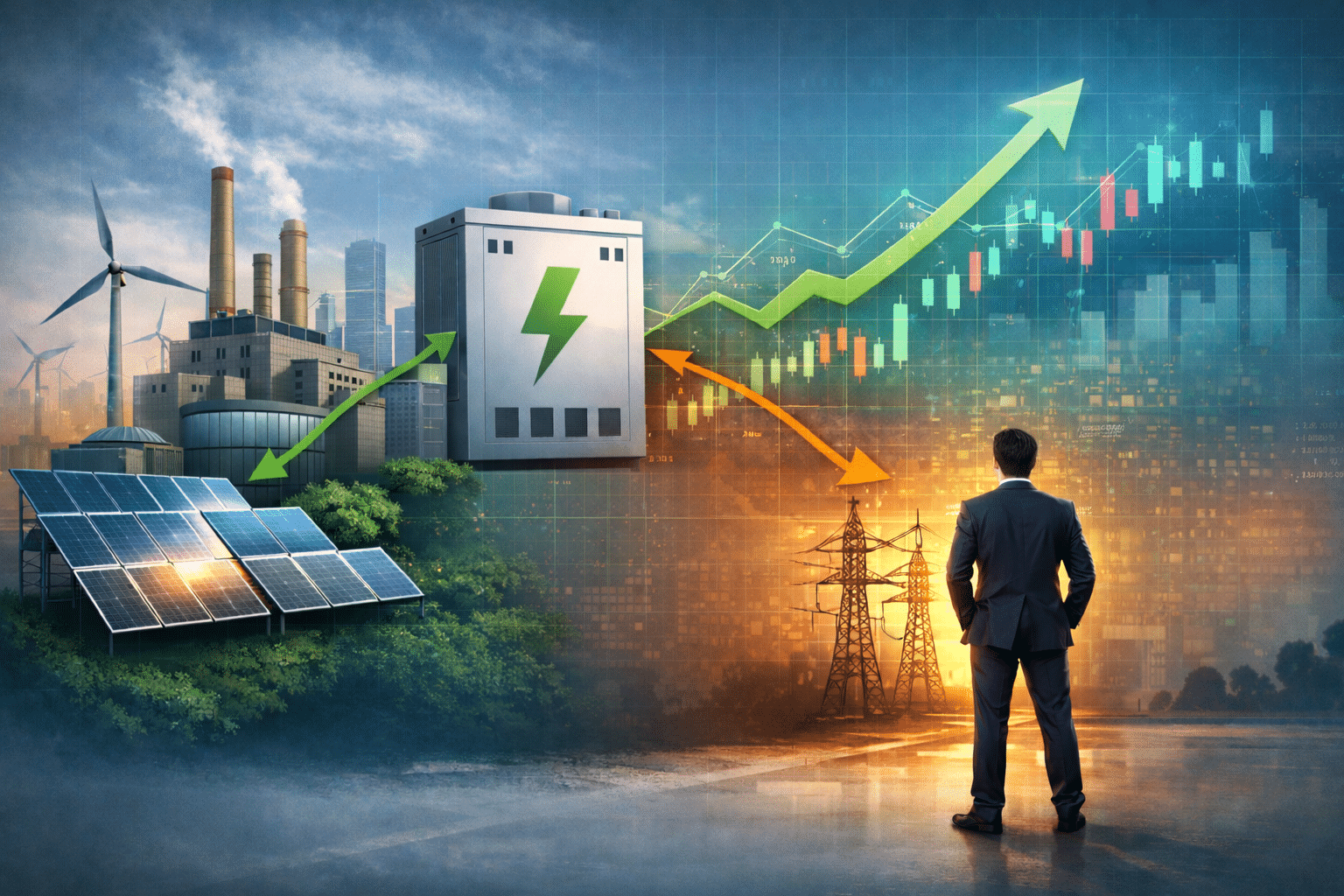
For years, industrial self‑consumption has been understood as an efficiency tool: an investment in renewable energy production aimed at reducing electricity bills. However, this approach is now obsolete. The combination of self‑consumption and energy storage is driving a much deeper structural shift: energy is no longer a cost to be minimised but a strategic asset to be actively managed.
Today, industry does not just consume electricity. It actively participates in the electricity system.
From passive to active self‑consumption
The traditional paradigm was simple: CAPEX investment, payback through bill savings, and limited interaction with the market.
This model has evolved.
The new approach is dynamic: optimisation based on hourly prices, participation in flexibility markets and real‑time operational decision‑making. The electrification of industry and the increasing volatility of electricity markets make this shift essential.
The result is clear: industry is moving from being a passive consumer to becoming an active player in the energy system.
The central role of the “behind‑the‑meter” battery
The battery is no longer a technological add‑on, but the key enabler of active management.
Its applications are multiple and can be combined, including intraday arbitrage to capture price spreads, peak shaving, replacing grid consumption during periods of high prices and participation in balancing and flexibility services.
A concrete example in Spain is the SRAD mechanism (Active Demand Response Service), which in 2026 has demonstrated its potential, with availability payments of around €65/MW and annual revenues that can reach between €100 000 and €150 000 per MW in certain cases.
These revenues, combined with consumption optimisation, completely transform the economic logic of self‑consumption.
Hybridisation: from stand‑alone assets to integrated systems
The real leap in value does not lie in installing solar panels or batteries independently, but in integrating them into a coordinated system: photovoltaic energy + battery + industrial demand.
This system enables the joint optimisation of production, storage and demand. It is not about adding assets, but orchestrating them.
Here, a critical element emerges: forecasting.
Without reliable price forecasts, demand and renewable energy production, optimisation loses consistency. Operations cease to be strategic and become reactive.
The key is not technology, but management
Hardware, such as panels and batteries, is rapidly becoming a commodity. The true competitive edge lies in the quality of market forecasts, operational strategy and probabilistic risk management.
In this context, one idea is fundamental: the quality of revenues depends more on forecasting than on the optimiser.
Simplified models or those based on average prices tend to overestimate revenues and lead to poor investment decisions. Market volatility and extreme events require advanced approaches, with hourly granularity and probabilistic scenarios.
Barriers still hindering adoption
Despite its potential, there are significant obstacles, such as regulatory uncertainty, particularly in flexibility markets; operational complexity, which requires advanced technical capabilities; lack of awareness within the industrial sector; and the risk of overestimating revenues in the absence of robust models. In addition, the rapid growth of self‑consumption in Spain, with more than 9 GW installed, is altering demand patterns and adding new layers of complexity to the system.
A strategic, not technological, decision
The conclusion is unequivocal. Industry that continues to manage its energy passively will be at a disadvantage compared to those adopting active strategies based on data, forecasting and optimisation.
Self‑consumption with batteries is no longer merely an efficiency solution. It is a lever for competitiveness, a source of revenue and a key element in industrial strategy.
This is not about installing technology. It is about competing in a new energy paradigm.
AleaSoft Energy Forecasting’s analysis on the prospects for energy markets and storage in Europe
On Thursday, April 16, AleaSoft Energy Forecasting will hold the 65th edition of its cycle of monthly webinars. The session will once again feature Raúl García Posada, Director of ASEALEN, who will be participating for the fifth time in this series. This edition will address the evolution and prospects of European energy markets, along with the regulatory framework, the current situation and forecasts for energy storage.
Source: AleaSoft Energy Forecasting.