


AleaSoft Energy Forecasting, November 10, 2026. MITECO has called the first high-efficiency cogeneration auction for February 23, 2027, which will award 650 MW. After years of decline for this technology in Spain, the call opens the door to modernising industrial facilities. The profitability of the investments will depend on sound long-term forecasts of electricity, gas and CO2 prices, and on the assessment of risk scenarios.
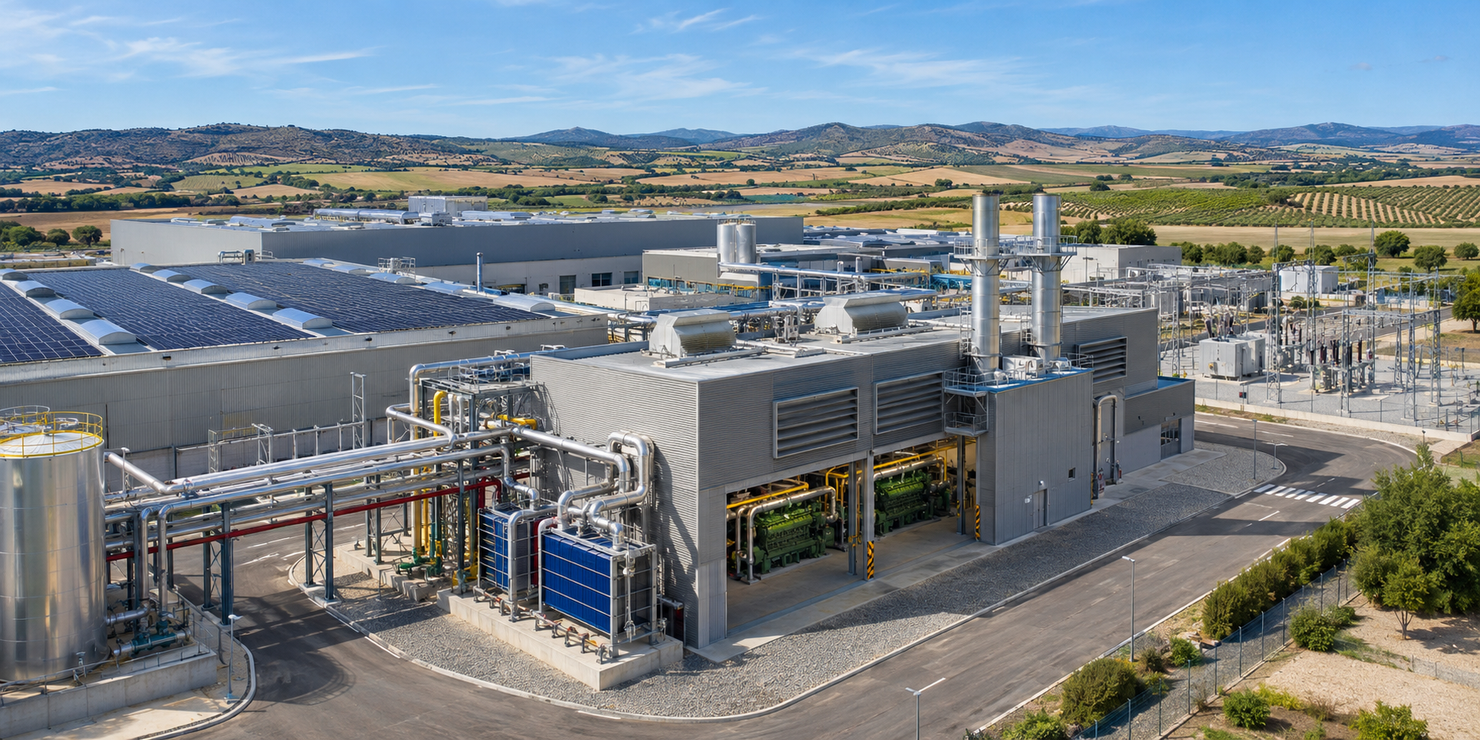
An opportunity to revive industrial cogeneration
The Ministry for the Ecological Transition and the Demographic Challenge (MITECO) has published the call for the first high-efficiency cogeneration auction, which will be held on February 23, 2027 and will award 650 MW. The winning facilities will obtain the specific remuneration regime. The market operator, OMIE, will administer the auction and the CNMC will supervise it. This is the first call under Royal Decree 530/2026 and Order TED/672/2026, which set the framework for renewing the cogeneration fleet of Spanish industry.
The resolution divides the capacity into eight quotas for natural gas facilities, totalling 505 MW, and two quotas for biomass, with 145 MW. This first call is part of a programme to renew 1200 MW of high-efficiency industrial cogeneration, through new facilities or the modification of existing ones.
This will be the first auction specifically for high-efficiency cogeneration in Spain, although these facilities already had economic support mechanisms. Until now, remuneration was set through regulated parameters, without a competitive award procedure. The main novelty of this auction is that remuneration will be determined through a competitive process. This change seeks to promote economic efficiency in the allocation of support and to facilitate the renewal of the cogeneration fleet.
The initiative comes after several years in which this technology has lost weight. According to Red Eléctrica data, cogeneration contributed 11.4% of national electricity generation in 2019, while in 2025 its share fell to 5.7%.
This decline particularly affects industry, where cogeneration simultaneously produces electricity and useful heat from the same fuel. Its high efficiency reduces primary energy consumption and supply costs in sectors such as chemicals, food, paper and ceramics.
Long-term forecasts will determine the viability of the bids
Order TED/672/2026 establishes that participants will bid a percentage reduction on the standard value of the initial investment of the reference standard facility, from which the investment remuneration will be calculated.
Winning the auction does not by itself guarantee the profitability of the project. The regulatory useful life will be 12 years for natural gas cogeneration plants and 20 years for biomass plants, so the bid submitted in February will shape the plant’s economic results for more than a decade.
In natural gas facilities, operating margins will depend on the combined evolution of gas prices, emission rights for CO2 and electricity prices, as well as on the thermal needs of each industrial process. A rise in gas prices is not always passed on in the same proportion to the price of electricity, especially in a market with more and more hours of photovoltaic production at low prices. In addition, the spikes and volatility of gas prices during 2026 show the risk of basing an investment decision on a single central scenario.
For this reason, companies will need consistent forecasts of the three prices and alternative scenarios with high gas and CO2 prices, lower electricity revenues or changes in operating hours. This analysis makes it possible to set the percentage reduction that each facility can bid without compromising its viability.
Renewables, storage and renewable hydrogen in the new cogeneration
The future of industrial cogeneration will also depend on its integration with other energy supply and management solutions. Combining it with photovoltaic plants and battery storage can optimise electricity consumption and provide operational flexibility, while biomass and renewable hydrogen make it possible to advance the decarbonisation of thermal processes. The order requires natural gas facilities to have the equipment needed to use gas with at least 10% renewable hydrogen by volume, and requires those using fossil fuels to end the accrual period of the remuneration regime before December 31, 2045.
Forecast quality as a decisive factor
The first auction will make it possible to recover part of Spain’s industrial cogeneration. Its contribution to the competitiveness of industry will depend on technological modernisation and on the quality of investment decisions. AleaGreen, the AleaSoft Energy Forecasting division specialising in long-term forecasts, provides forecast curves for electricity market prices, gas and CO2 prices with confidence bands, which make it possible to assess the auction bid and the plant’s revenues over its entire regulatory useful life. Meanwhile, AleaConsulting prepares scenario and risk studies to support the financing and investment decisions of industrial projects.
Source: AleaSoft Energy Forecasting