


AleaSoft Energy Forecasting, April 15, 2026. The renewable sector is entering a new phase marked by the saturation of electricity markets and the loss of value of production at certain hours. In this context, hybridisation with storage is consolidating as the pathway to optimise revenues, reduce risks and adapt assets to an increasingly volatile and competitive environment.
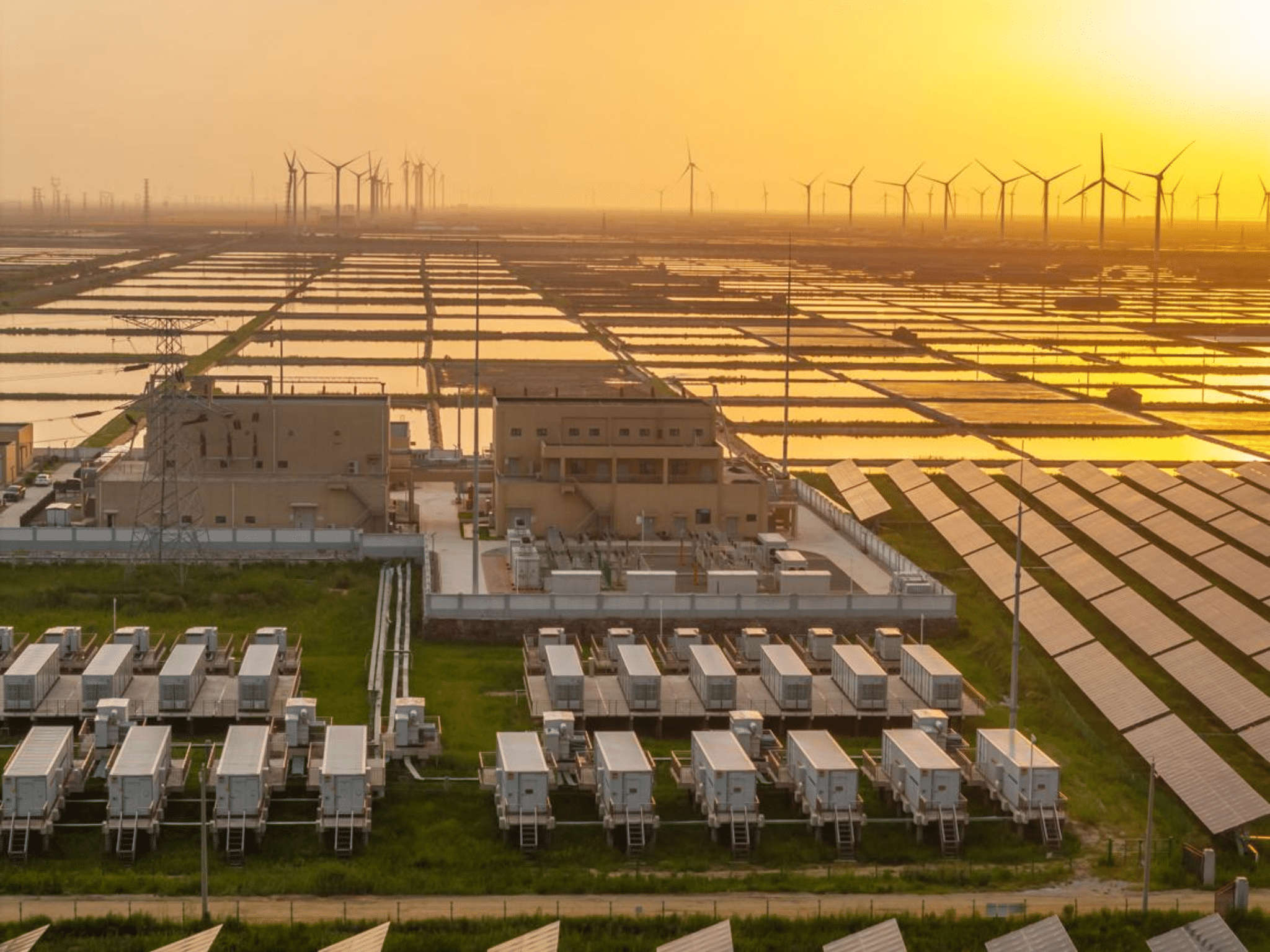
The renewable sector is entering a new phase. After years of rapid growth, particularly in photovoltaic energy, European electricity markets, and especially the Spanish market, are showing clear signs of saturation. Zero or negative prices, solar cannibalisation and the concentration of production at certain times of the day are eroding the value of renewable assets.
The question is no longer how much is produced, but when the energy is sold and at what price.
The problem: structural loss of value
The traditional logic of renewable energy projects, based on maximising production and securing revenues through PPA or the market, is under pressure. The increasing frequency of zero or negative prices during solar hours, together with photovoltaic cannibalisation, where greater production implies lower prices, and system saturation at peak times, are reducing the marginal value of energy.
The result is a progressive deterioration of expected revenues, particularly for merchant or semi‑merchant assets.
The response: hybridisation as a new value architecture
Against this backdrop, hybridisation with energy storage is emerging as a structural solution. It is not an incremental improvement, but a profound shift in operational logic. The ability to shift energy to higher‑value hours, participate in balancing markets and build more robust revenue profiles completely transforms the role of the asset.
The plant ceases to be merely a production facility and becomes an optimised system.
Real cases illustrating the shift
The combination of batteries with renewable energy production makes it possible to capture value in multiple ways. In the case of photovoltaic energy with storage, intraday price differentials can be exploited, curtailment reduced or eliminated and sales optimised during the most profitable hours. In many scenarios, this translates into revenue increases of between 20% and 40% compared to operations without storage.
In the case of wind energy, batteries provide stability against resource volatility, enable more active production management and improve revenue predictability, acting as a buffer against market risk.
In more advanced systems combining photovoltaic energy, wind energy and storage, the key lies in coordinated operation. The complementarity between technologies reduces aggregate volatility and enables optimisation of overall portfolio performance, generating value beyond each individual asset.
Direct impact on financing: the market’s new requirement
The most significant implication of this shift is financial. Hybridisation is changing bankability criteria by improving the risk profile, stabilising cash flows and enabling more sophisticated contractual structures.
Moreover, a clear trend is emerging: financial institutions are beginning to require storage scenarios in order to finance renewable energy projects. What was a few years ago an option is progressively becoming a necessary condition.
The critical factor: advanced modelling
However, not all hybridisation creates value in itself. One of the most frequent risks is the overestimation of revenues when simplified models based on average prices or historical spreads are used.
Operational reality requires long‑term hourly models, probabilistic scenarios and the integration of multiple markets, such as spot, intraday and balancing services. Without this level of rigour, decision‑making can lead to errors in project valuation and financing.
Risks that must not be ignored
The development of storage also presents significant challenges. The potential future compression of spreads due to high battery penetration, uncertainty in price evolution and a regulatory framework still under development require a prudent approach based on advanced analysis.
Clear conclusion: the sector’s new standard
Hybridisation is not a technological trend, but the new competitive standard of the renewable sector. In an environment marked by saturation and volatility, profitability no longer depends solely on producing energy, but on managing it strategically.
Assets that do not incorporate this logic will be exposed to a progressive erosion of value. Those that do will not only protect their profitability, but redefine it.
AleaSoft Energy Forecasting’s analysis on energy markets and storage in Europe
On Thursday, April 16, AleaSoft Energy Forecasting will hold the 65th edition of its monthly webinar series. This session will analyse the recent evolution and prospects of European energy markets, as well as the role of energy storage, its regulatory framework, its current situation and the opportunities it presents in the new electricity system context.
Source: AleaSoft Energy Forecasting.