


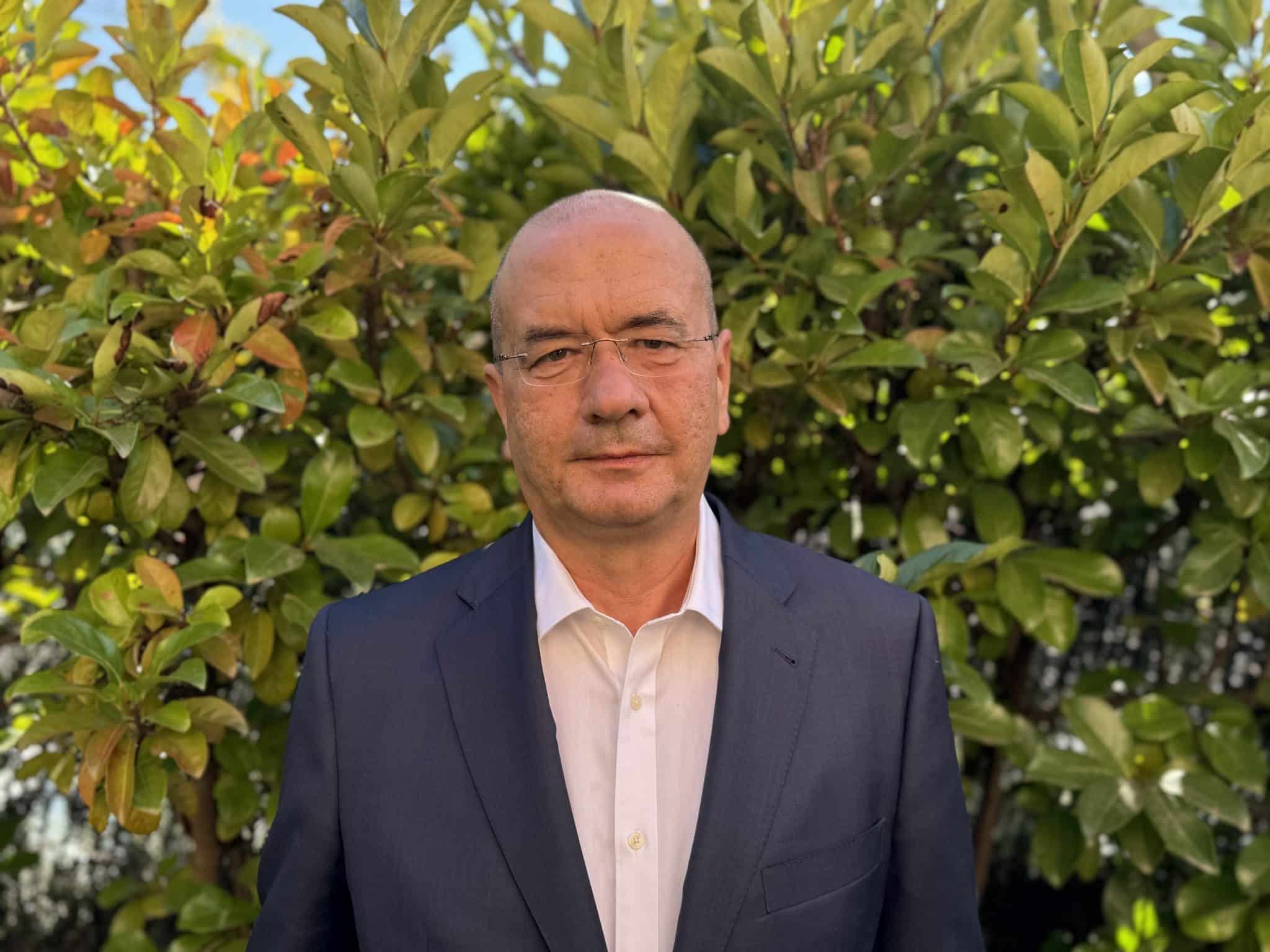
AleaSoft Energy Forecasting, March 30, 2026. Interview by Ramón Roca, director of El Periódico de la Energía, with Antonio Delgado Rigal, PhD in Artificial Intelligence, founder and CEO of AleaSoft Energy Forecasting.
In recent weeks, gas prices and European electricity market prices have risen again due to tensions in the Middle East. To what extent will these types of geopolitical factors continue to shape energy price developments in the coming years?
Geopolitical factors will continue to be a relevant element in price formation, particularly through natural gas and CO₂, which still set the marginal price during many hours in many European electricity markets. Episodes such as tensions in the Middle East, risks affecting key infrastructure or disruptions in gas and oil supplies have an immediate impact on global energy markets.
However, it is important to put this into context: volatility is not new; it has always been present in electricity markets. What has changed is the system’s sensitivity, which at certain times is now more dependent on external factors.
In the medium and long term, these events will continue to generate price spikes, but their relative importance will decline compared to structural factors. In this regard, progress towards greater energy independence in Europe, based on domestic renewable energy and electrification, will help reduce exposure to external shocks and improve system stability in the future.
Beyond the current geopolitical context, what will be the main structural factors shaping the evolution of European electricity markets looking ahead to 2026 and over the medium and long term?
The main structural factors will be, firstly, the massive penetration of renewable energy, particularly solar photovoltaic and wind energy, which are completely transforming price formation and market price curves.
Secondly, the growth in electricity demand will be key, driven by the electrification of the economy and new sources of consumption such as data centers and hydrogen production.
In addition, the deployment of energy storage will be essential to manage renewable variability. Likewise, the development of electricity grids, both transmission and distribution, will be decisive, as they currently represent one of the main bottlenecks for renewable energy generation projects, battery energy storage systems projects and new demand connections.
Strengthening international interconnections will also help improve market integration, smooth price differences and increase security of supply. All of this will take place in a context where regulatory changes, including capacity markets and flexibility mechanisms, will be fundamental in providing more stable investment signals.
The growth of renewable energy is leading to phenomena such as price cannibalisation, curtailment and zero or negative prices. To what extent will hybridisation with batteries be key to addressing these challenges?
Hybridisation with batteries will be crucial, but the solution goes further: storage in general will become a structural element of the system. This includes not only batteries, but also pumped hydro storage and other storage technologies, together with increased demand‑side flexibility.
In an environment with high renewable energy penetration, particularly solar PV, generation tends to be concentrated in certain hours, leading to price cannibalisation, curtailment and episodes of zero or negative prices. Storage makes it possible to shift this energy to higher‑value hours, reducing these effects.
Furthermore, active demand management will allow consumption to be adapted to the availability of renewable energy generation, also contributing to system balancing. In this new context, both storage and demand flexibility will evolve from complementary elements into fundamental pillars of the electricity system.
The profitability of storage largely depends on its ability to capture different revenue streams. Which mechanisms do you consider most promising for monetising flexibility, both in batteries and in demand management?
The key lies in combining multiple revenue streams. Arbitrage in the day‑ahead and intraday markets will continue to form the basis of the revenue stack in the long term, although on its own it is not usually sufficient.
Balancing and ancillary services are also becoming increasingly relevant in systems with high renewable energy penetration. At the same time, capacity markets and demand flexibility mechanisms will have to play a growing role.
New contractual schemes are also emerging, such as Flexibility Purchase Agreements (FPA) and battery tolling agreements, which can provide long‑term revenue visibility and facilitate project financing by reducing exposure to merchant risk.
On the other hand, the aggregation of assets and demand will enable additional value to be captured by facilitating participation in different markets and optimising the use of available flexibility. Ultimately, the storage business model will become increasingly complex and based on the joint optimisation of multiple markets, services and contractual structures.
In this context, uncertainty regarding future revenues remains one of the main challenges for financing storage projects. What role do market price and spread forecasts play in risk reduction and investment decision‑making?
Forecasts are a central element for the bankability of projects. It is not only a matter of estimating an average price, but of understanding the hourly market structure, the evolution of spreads and the interaction between different markets and services.
In storage, revenues depend precisely on these spreads and their persistence over time, so the quality of forecasts is critical. Models that integrate fundamental variables (generation mix, demand, fuels, CO₂ and installed capacity) with artificial intelligence techniques and probabilistic analysis make it possible to significantly reduce and quantify uncertainty, which is essential when estimating risk in investment or financing processes.
The use of scenarios and probabilistic bands, such as P10 and P90, is indispensable for risk assessment and facilitating financing, as it allows investors and banks to make decisions with a more complete view of the range of possible outcomes and their probabilities.
There is much discussion about the growth in electricity demand associated with data centers, digitalisation and Artificial Intelligence. Could this new demand become one of the major drivers of the electricity system in the coming years?
Yes, clearly. Data centers and digitalisation represent a new structural demand with very specific characteristics: they are intensive, continuous loads and, in many cases, capable of long‑term planning through supply contracts.
This type of demand can become a key element in absorbing growing renewable energy generation, especially during hours of low traditional demand. In addition, it introduces more stable investment signals into the system.
In some countries, its impact is already becoming very significant, and all indications suggest it will continue to grow in the coming years, driven by the expansion of Artificial Intelligence and digital services. This may help balance the system, although it will also pose, and is already posing, significant challenges in terms of grids and infrastructure.
What role can industrial self‑consumption with storage play as a tool to improve business competitiveness?
Industrial self‑consumption with storage can be a strategic tool to improve competitiveness. It allows companies to reduce their exposure to electricity market volatility, optimise energy costs and improve predictability.
Storage makes it possible to manage energy more flexibly, adapting consumption to price signals and even participating in flexibility services.
In an environment of volatile prices and increasing electrification, companies that integrate self‑consumption solutions with storage will have a clear competitive advantage over those that depend exclusively on the market.
Electricity grids are becoming one of the main bottlenecks in the energy transition. What is your view on the current situation of grids and the role of international interconnections?
Grids are probably one of the main limiting factors at present. Access and connection capacity is conditioning the development of new renewable energy and storage projects in many countries, including Spain.
It is necessary to significantly accelerate investment in both transmission and distribution networks, as well as to improve associated administrative processes. Furthermore, the development of solutions such as flexible access and grid digitalisation will be essential to maximise the use of existing infrastructure.
International interconnections are also fundamental to improving system efficiency, reducing price differences between markets and increasing security of supply. Europe still has room for improvement in this area, with major energy islands such as the Iberian Peninsula, and their development will be a priority in the coming years.
AleaSoft has been developing forecasting models for more than 27 years that combine Artificial Intelligence, classical statistics and fundamental models. What differentiates this approach from other models in the market and what advantages does it bring in an increasingly complex environment?
The main difference is the hybrid approach. It is not about choosing between fundamental models or statistical models, but about integrating them coherently.
Fundamental models allow the structure of the electricity system (supply, demand, capacity and regulation) to be represented, while artificial intelligence and statistics make it possible to capture complex patterns and temporal dynamics. The combination of both approaches makes it possible to anticipate structural changes that are not visible with purely statistical models.
This results in more robust and coherent forecasts, particularly in the long term, up to 30 or 40 years ahead, which is essential for investment decision‑making. Additionally, the use of probabilistic models makes it possible to explicitly incorporate risk, which is fundamental in an environment of high uncertainty.
For those who are not yet familiar with AleaSoft, how would you define your activity and what type of services do you offer in the energy sector?
At AleaSoft, we are fundamentally consultants specialised in energy markets, with a very clear focus on adding value to strategic and investment decision‑making.
Our activity is structured into four main areas. Firstly, we produce short-, mid- and long‑term energy market forecasts across Europe, which form the basis for decision‑making in an increasingly complex environment.
Secondly, we develop revenue analyses for storage projects, both stand‑alone batteries and hybrid renewable projects, where we assess their economic viability and performance across different markets.
Thirdly, we provide advisory services in electricity markets, helping different stakeholders, from utilities to retailers, funds and large consumers, to understand market operation and optimise their strategies.
Finally, we actively participate in the financing processes of renewable projects by providing price curves and analyses that help structure bankable transactions and reduce risk for investors and financial institutions.
Overall, our objective is clear: to provide rigour, coherence and a long‑term vision in a sector undergoing profound transformation.
Source: AleaSoft Energy Forecasting.