


AleaSoft Energy Forecasting, April 22, 2026. Photovoltaic energy can go beyond electricity production and become a tool for soil regeneration. International experiences demonstrate its potential to restore degraded ecosystems, an approach that is particularly relevant in countries with a high risk of desertification such as Spain.
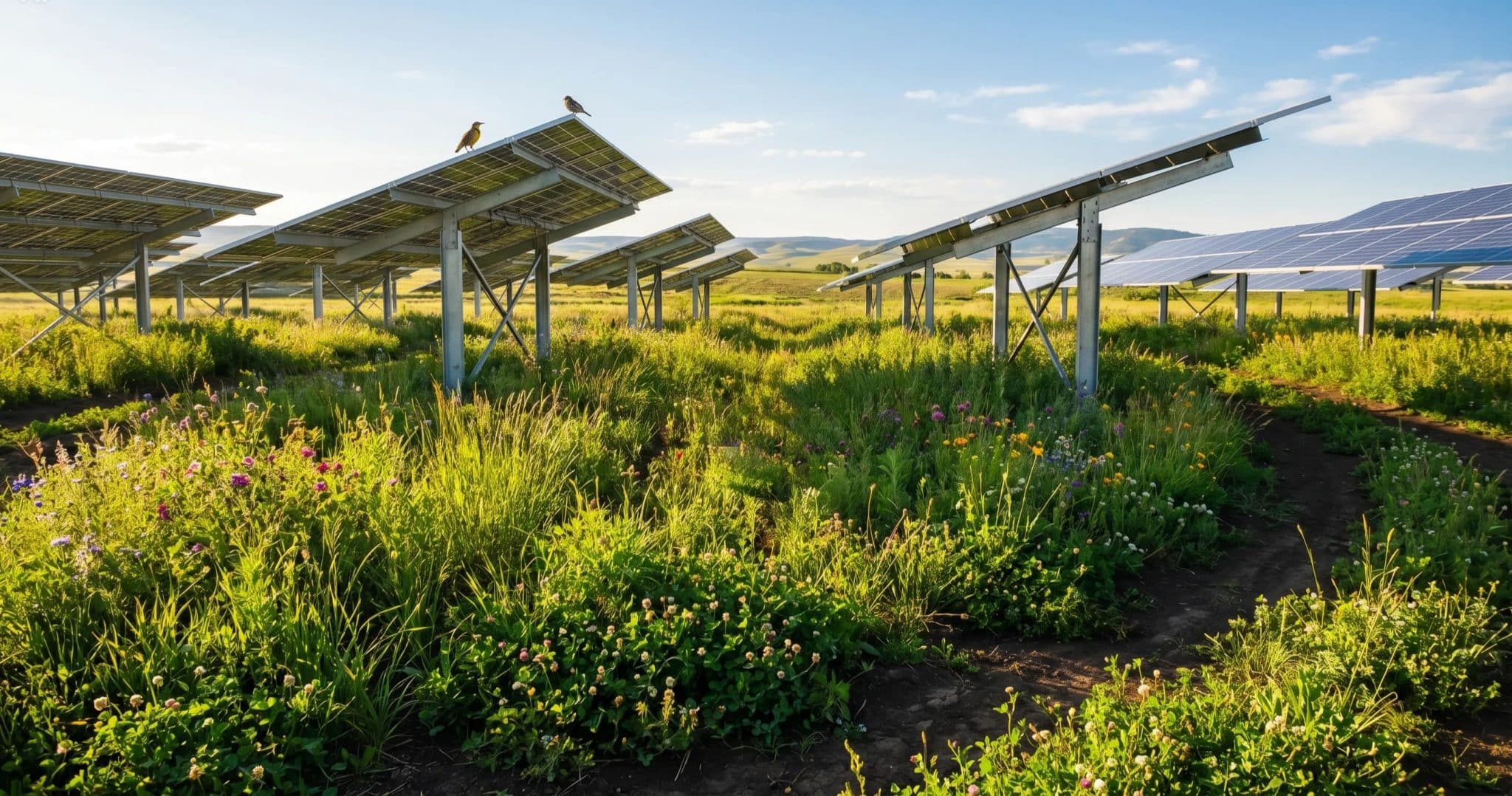
For years, photovoltaic energy has primarily been presented as a solution for electricity production within the energy transition. However, recent international experiences are expanding this perspective towards a more integrated model, where electricity production is combined with environmental restoration and local economic development.
A notable example is the Kubuqi Desert in China, where the large‑scale deployment of solar installations has shown that these infrastructures can contribute to the regeneration of degraded ecosystems. The presence of solar panels has helped reduce wind erosion, increase soil moisture retention and promote the gradual recovery of vegetation, while also generating economic activity in the region.
The context in Spain
In Spain, the debate surrounding the deployment of solar power plants often focuses on their territorial impact. Questions are raised about land use, competition with other uses and their effect on the landscape. These concerns are valid, particularly in poorly designed projects, but they do not reflect the full potential of this technology.
The country faces one of the highest risks of desertification in Europe, alongside vast areas of low agricultural productivity and an exceptional solar resource. This context opens the door to rethinking the role of photovoltaics not only as a production technology, but also as a tool for land management.
Photovoltaics as a regeneration tool
The strategic approach shifts when photovoltaic energy is analysed from an integrated perspective. Proper plant design can reduce soil evaporation, improve the local microclimate and enable combined uses such as agrivoltaics or grazing.
These hybrid solutions help to curb soil degradation and can act as a barrier against the advance of desertification. In this sense, photovoltaic energy production is no longer solely a vector for decarbonisation but becomes an active element in environmental management.
Floating photovoltaics as an additional tool to mitigate climate change
Floating photovoltaics (FPV) also emerge as a tool to combat rising global temperatures and regulate ecosystem temperatures. Given that three quarters of the planet is covered by water, the oceans absorb most solar radiation and are most affected by global warming (a phenomenon exacerbated by the effects of nanoplastics). This leads to the loss of marine ecosystems and biodiversity, such as coral reefs.
The deployment of floating photovoltaic panels reduces the water surface temperature, which in turn improves the efficiency of the renewable system itself. Their albedo effect on solar radiation helps to control algae growth, evaporation and the temperature of the ecosystem, whether ocean, lake or reservoir, on which they are installed.
A paradigm shift in the energy transition
The energy transition is at a critical juncture, marked by the growing penetration of renewable energy and, at the same time, increasing social polarisation around its development. The lack of integration between different narratives may slow the deployment of necessary solutions.
China’s case illustrates a paradigm shift in which energy not only reduces emissions but also helps address structural environmental challenges. Spain has the resources, the need and the technology to replicate this model, although it requires an integrated vision, a coherent narrative and intelligent project design. Photovoltaics can be not only a solution for the energy transition, but also an added value in the fight against climate change and desertification.
AleaSoft Energy Forecasting’s prospects and analysis on energy markets and storage in Europe
AleaSoft Energy Forecasting will hold its 66th webinar on May 21, 2026, addressing how recent developments in European energy markets are redefining the role of storage and, in particular, batteries as key assets for capturing value in highly volatile environments with increasing renewable energy penetration. It will also provide an in‑depth look at revenue streams, operating strategies and emerging opportunities in this new paradigm, where flexibility is becoming ever more decisive. In this context, AleaSoft Energy Forecasting stands out for its ability to analyse, model and optimise both renewable energy projects and hybrid solutions, integrating storage with renewable energy production to maximise their value in electricity markets and support more robust decision-making in a constantly evolving environment.
Source: AleaSoft Energy Forecasting.