


AleaSoft Energy Forecasting, August 14, 2026. The MITECO has awarded €612 million to 173 wind repowering and hydroelectric modernisation projects under the Repoten 2 programme. More than half of them will include hybridised storage, adding 2 GWh of new capacity. The call for applications shows that renewing an asset now requires coordinating capacity, storage, grid access, captured price and financing.
A programme that accelerates the renewal of the Spanish renewable fleet
The second call of the Circular Repowering programme, Repoten 2, has allocated €612 million of NextGenEU funds from the Recovery, Transformation and Resilience Plan (PRTR) to 173 projects aimed at renewing wind farms and hydroelectric facilities of up to 50 MW. The aid, managed by the IDAE, will support 81 wind repowering actions and 92 technological and environmental renewal actions at hydroelectric plants.
The selected projects add up to 2433 MW of wind capacity and 1091 MW of hydroelectric capacity, more than 3.5 GW of generation capacity associated with the renewed facilities. They will also mobilise an investment of close to €3.75 billion.
Galicia leads the call with 40 projects, followed by Castilla y León, Castilla-La Mancha, Andalusia and Aragon. The actions must be completed before June 30, 2030, with the possibility of extending the deadline to December 31 of the same year. This execution horizon means that decisions on design, energy storage, grid access and financing have to be addressed well in advance.
Repowering is no longer just about changing the turbine
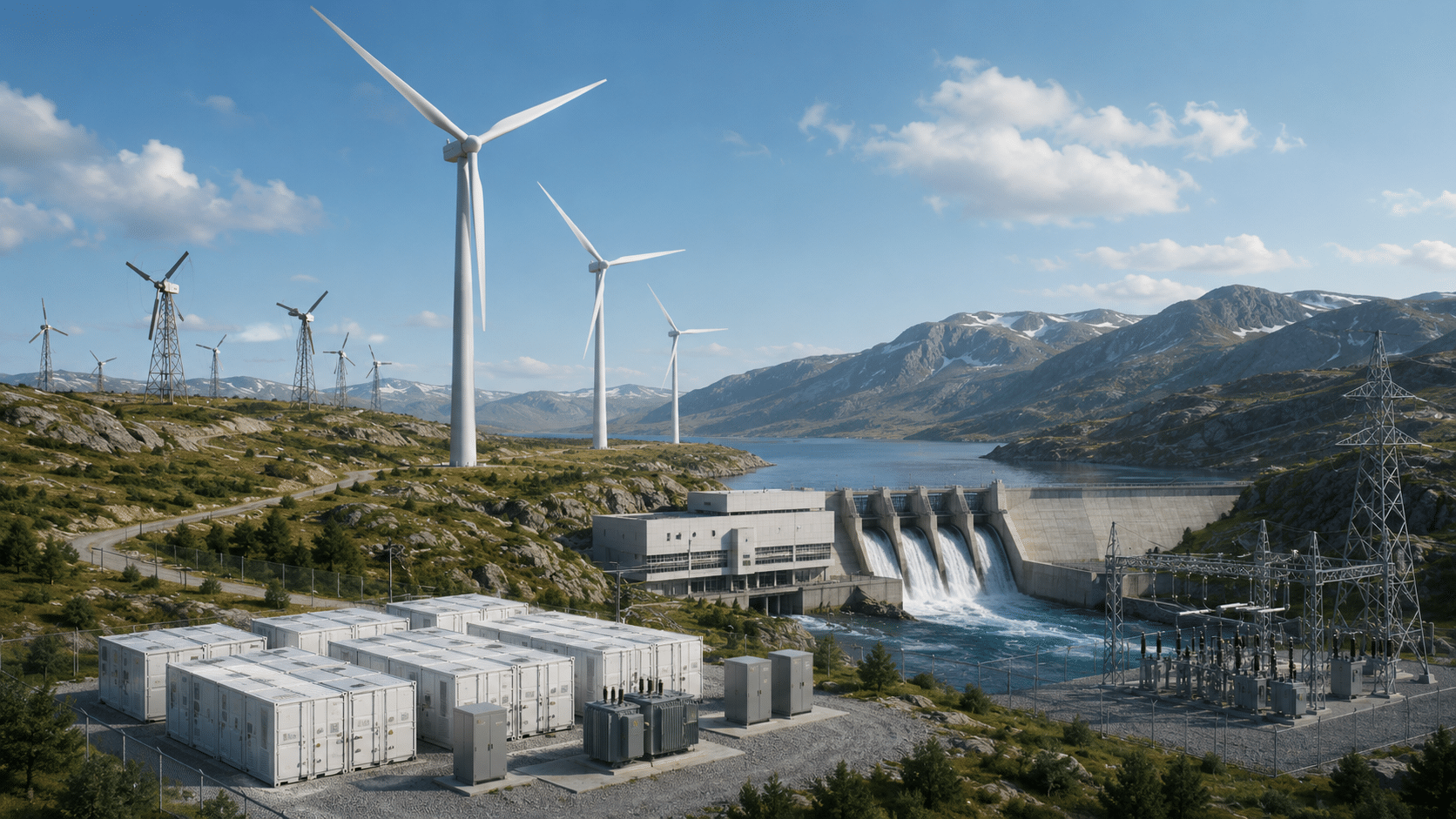
The traditional image of repowering could be summed up as replacing old wind turbines with a smaller number of larger, more efficient machines. Repoten 2 shows the scale of this process. Around 3000 old wind turbines, with an average capacity of 790 kW, will be replaced by fewer than 500 new units, with an average capacity of 5 MW. The average capacity per wind turbine will therefore increase more than sixfold.
However, increasing installed capacity is only part of the decision. It is also necessary to determine what capacity is optimal in relation to the available grid access capacity, whether it is worth incorporating storage, what modifications are needed to the access and connection permits and how to operate the whole set to obtain the maximum value from the production.
The aim is no longer simply to install as many megawatts as possible. It is about jointly optimising the renewable resource, the site, the connection point and the revenues expected over the asset’s entire lifetime.
Hybridised storage gains weight in project design
53% of the awarded projects include hybridised storage. Together they will add slightly more than 2 GWh of new storage capacity to the electricity system. The figure does not mean that a battery is necessary in every repowering, but it does reflect that storage has become part of the decisions that must be assessed from the earliest phases of a project.
Sizing storage correctly requires analysing its power and capacity together with the renewable production profile, the capacity available at the connection point, the expected price spreads, participation in balancing services, the number of cycles and battery degradation.
A battery makes it possible to shift part of the production from lower-value hours towards moments with higher prices and to make better use of limited grid access capacity. However, a larger battery does not necessarily mean higher profitability. Optimal sizing depends on future prices, on the generation profile, on evacuation constraints and on the revenue opportunities available in each market.
The connection point and the captured price change the analysis
Repowering can significantly increase a wind farm’s installed capacity while grid access capacity remains a limited resource. Under certain conditions, regulation allows storage or other technologies to be added through hybridisation using the same connection point and the access capacity already granted, although these modifications must comply with the corresponding procedures and requirements.
This makes it necessary to compare different alternatives. A project can keep its access capacity and manage injection limitations by incorporating storage to shift energy, or it can propose modifications to the access and connection permits where these are technically and administratively viable.
Alongside the energy that can be evacuated, the price at which that production will be valued also matters. The captured price reflects the average market price weighted by the facility’s hourly injection profile and can differ considerably from the average market price.
In a system with growing penetration of wind and photovoltaic generation, the coincidence of high renewable production can push prices down in certain hours, which can put downward pressure on the captured price. Hourly price and production forecasts are therefore essential to estimate how the captured price and the revenues of a repowered asset will evolve and what value storage can add.
Financing calls for modelling a more complex asset
The projects selected under Repoten 2 will mobilise an investment of close to 3.75 billion of euros, far above the amount of the aid granted. Private financing will therefore remain a fundamental piece in bringing these actions through to commissioning.
When repowering incorporates storage, the financial model has to represent revenue sources with different characteristics. Revenues from renewable generation can be joined by those from arbitrage in the energy markets and from the battery’s participation in balancing services, as well as factors such as degradation, operating cycles and a possible replacement of equipment over the project’s lifetime.
Analysing bankability takes more than a generic forecast of the average market price. It is necessary to estimate the hourly revenue profile, the price captured by the generation, the possible evacuation limitations and the behaviour of the battery under different price and volatility scenarios.
Having consistent assumptions for all these variables reduces the uncertainty of the financial model and makes it possible to compare design alternatives better before taking investment and financing decisions.
Forecasts and simulations for taking coherent decisions
Repowering opens up many possibilities, but it also forces decisions that are closely related to each other. Choosing the capacity of the new facility conditions the use of the connection point. Access capacity influences the sizing of the battery. The size and operating strategy of the storage modify expected revenues and, finally, all these elements determine the profitability and the financing of the project.
The hourly forecasts of electricity market prices and renewable production from AleaSoft Energy Forecasting make it possible to analyse these decisions under long-term scenarios, estimating the captured price, the expected revenues and the effect of different asset configurations.
On that basis, the analyses from AleaStorage make it possible to compare different energy storage sizings, simulate charging and discharging strategies and estimate the revenues that can be obtained both in the energy markets and in the balancing services. Integrating these results into the financial model helps to identify which configuration delivers the most value and provides coherent assumptions for the dialogue with banks, funds and investors.
Repowering is not only about replacing old technology with more efficient equipment. It means redesigning the asset for an electricity system different from the one that existed when it was built, and doing so taking into account from the outset how it will produce, how it will use the grid, when it will sell its energy and how it will generate value over the coming decades.
Source: AleaSoft Energy Forecasting