


AleaSoft Energy Forecasting, September 4, 2026. Spain needs more renewable generation, but it also needs new electricity demand capable of absorbing it. The regulation proposed for data centers is demanding, but it opens an opportunity to link new demand with new generation, storage and PPAs.
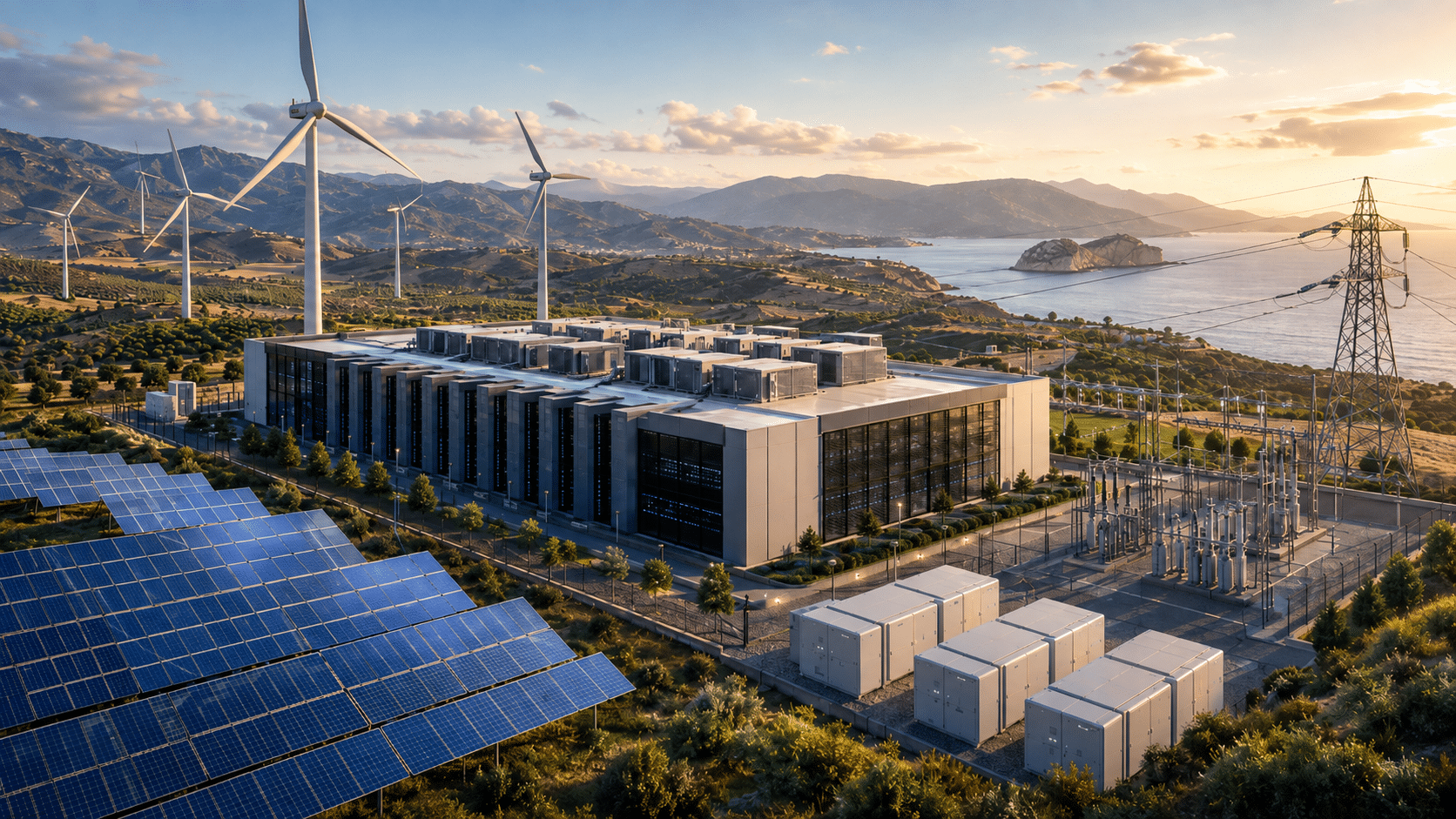
The growth of data centers has become one of the major debates in the electricity sector. The expansion of cloud computing, the digitalisation of the economy and, above all, the accelerated development of artificial intelligence are multiplying the need for computing capacity. The consequence is clear, data centers need a great deal of electricity.
The International Energy Agency estimates that data centers consumed around 415 TWh in 2024, approximately 1.5% of global electricity. In its central scenario, that consumption could reach around 945 TWh in 2030.
An economy seeking to decarbonise through electrification needs to produce a great deal of renewable electricity, but it also needs consumers capable of using it. Spain is beginning to need precisely that, new electricity demand.
The transition enters a new phase
For years, the debate focused mainly on how to install more renewables. That objective remains essential, but it is no longer enough. The next phase requires generation, networks, storage and demand to grow in a coordinated way.
The energy transition needs more renewable energy and, in parallel, more demand capable of consuming it. Data centers can become one of the major drivers of that new demand.
Spain has before it the possibility of combining two transformations that will shape the coming decades, the artificial intelligence revolution and the transition towards a decarbonised economy based on renewable electricity. Good regulation should ensure that both reinforce each other.
Spain needs demand, not just renewables
For much of the last two decades, the main objective of the European energy transition was to increase renewable generation capacity. Spain has advanced extraordinarily in that direction. The growth of photovoltaic and wind energy is transforming the structure of the electricity market, reducing emissions and lowering dependence on imported fossil fuels.
But renewable success creates new challenges. When solar production is very high during the central hours of the day, the number of hours with very low or negative prices increases, renewable generation curtailment appears and the price captured by certain technologies falls. The so-called price cannibalisation does not mean there is too much renewable capacity, it means the transformation of the system cannot happen solely on the supply side.
At the same time, more networks are needed, more energy storage, more interconnections and, above all, more electrification of demand. Electric vehicles, heat pumps, industrial electrification, renewable hydrogen and data centers form part of that second half of the transition. Spain’s problem is no longer only how to produce more renewable electricity, it is also how to create enough clean demand to consume it and make the next wave of renewable investment financeable.
Data centers can be one of the major new sources of clean demand
From an energy perspective, data centers present particularly interesting characteristics. They are large electricity consumers, have relatively predictable profiles and their investments are planned over long-term horizons. In addition, their energy consumption is fundamentally electrical.
That sets them apart from many traditional industries whose decarbonisation requires first replacing processes based on natural gas, coal, coke or oil derivatives. A correctly designed data center can start out with an almost fully decarbonised electricity supply.
This does not mean their environmental impact is zero. Energy efficiency, cooling systems, water consumption, backup generators, the materials used and territorial siting all need to be analysed. But, from the electrification standpoint, a data center can be one of the cleanest major new industries Spain can attract.
And one of their most criticised characteristics, their high electricity consumption, can become precisely one of their greatest contributions to the system. A 100 MW data center operating with a 90% utilisation factor would consume around 788 GWh a year. If that demand is matched by new renewable generation, it stops being merely consumption and becomes a driver of investment.
The new Spanish regulation changes the rules
On August 27, 2026, the Government put out for public consultation, on an urgent basis, a draft royal decree on the energy and environmental sustainability, resilience and digital sovereignty of data centers. The proposal sets demanding requirements and links access to the electricity grid to compliance with certain obligations.
The most relevant element for the electricity system is that centers falling within the scope of the regulation will have to back at least 80% of their electricity consumption with new renewable generation in every hour of operation, while renewable generation does not exceed 90% of the mix. In addition, the energy will have to meet an additionality criterion, every new megawatt consumed will have to be matched by a new renewable megawatt installed in the 18 months prior to start-up, through self-consumption or forward contracts such as PPAs.
Compliance is not merely declarative. The draft envisages increasing surcharges on charges and tolls and, ultimately, the loss of access and connection rights. It is, therefore, a demanding regulation, not a simple sustainability recommendation.
The ‘hour-by-hour’ requirement is the real change
The most transformative part of the proposal is not just the renewable percentage, it is the hourly correlation. It will not be enough to show that, over the year as a whole, a data center has contracted as many renewable MWh as it has consumed. In every hour of operation, at least 80% of the electricity consumed will have to correspond to renewable energy generated in that same hour.
This completely changes the design of supply. A data center operates 24 hours a day, while a photovoltaic plant concentrates its production in the solar hours. A solar PPA alone will therefore struggle to solve the problem. It will be necessary to combine complementary solar and wind generation profiles, storage, supply contracts and a degree of exposure to electricity market prices.
Every large data center thus becomes an exercise in matching hourly profiles, how much solar, how much wind, how much battery capacity and what contractual structure make it possible to meet the renewable target at the lowest cost and with an acceptable level of risk.
A twenty-year optimisation problem
The real question will no longer simply be at what price to buy electricity. It will be what the optimal supply architecture is over twenty or thirty years. We can contract more solar, combine it with wind, size a battery of two, four or six hours, structure one or several PPAs, keep part of the exposure merchant or introduce flexibility into certain loads. All of these decisions interact with one another.
In addition, an optimal solution in 2027 will not necessarily remain optimal in 2035. Hourly prices change, generation profiles evolve, renewable penetration increases, spreads shift, batteries degrade and regulation can change. This is therefore not a simple electricity contracting problem, but a long-term energy, economic and financial optimisation problem.
PPAs and storage gain value
Additionality can turn data centers into long-term energy buyers capable of giving revenue visibility to new solar and wind projects. That visibility is one of the essential elements for the financing of renewable projects. The value chain can be very powerful, stable new demand, long-term PPAs, greater bankability and new renewable capacity.
The hourly requirement adds a second layer. PPAs will have to evolve from a logic based mainly on average price and annual volume towards structures that take the production profile into account. For a consumer operating 24 hours a day, not all MWh have the same value. The complementarity between solar and wind gains value, and so do hourly forecasting, storage and the ability to manage residual market exposure.
The batteries can play a central role by shifting surpluses from hours of high generation to hours with lower renewable coverage. But there is no universal optimal size either. A larger battery can improve hourly coverage, although it increases investment, and a longer duration can shift more energy, but not necessarily deliver proportional returns. Sizing must be done jointly with the demand profile, the renewable portfolio and expected prices.
The electricity grid remains the physical limit
Defending the value of data centers does not mean ignoring their constraints. A project of hundreds of megawatts concentrates enormous demand at a specific point on the grid. The International Energy Agency warns that the local impact of data centers can be much greater than their weight in global electricity demand and that grid bottlenecks can delay a significant share of planned projects.
Spain is already seeing the scale of the challenge of connecting new demand. Red Eléctrica reported in July 2026 that 16 consumption facilities gave up access permits in full or in part, releasing 1040 MW on the transmission grid following the entry into force of the new capacity reservation scheme. Access capacity is a scarce resource and must be allocated to firm, viable projects, but the structural response cannot be only to restrict, the grid also needs to be reinforced.
It is not possible to develop an industrial policy based on electrification without developing the necessary electricity infrastructure in parallel. Generation, demand, storage and networks must be planned in a coordinated way.
Regulating without driving away investment
There are two opposite mistakes worth avoiding. The first would be to consider that any data center is positive simply because it represents investment. Not all projects have the same efficiency, firmness, location, water consumption or contribution to the system. It is reasonable to demand real commitments and prevent speculative applications from blocking access capacity for years.
The second mistake would be to impose conditions so rigid that viable projects end up locating in other countries. Data centers are international investments and Spain competes with other European markets. Regulation must combine environmental and energy requirements with legal certainty, predictability and technical viability.
Estimates from SpainDC, the data center association in Spain, show the scale of the opportunity. According to its 2025 Annual Report, installed IT power in commercial data centers reached 439 MW at the end of 2025, 24% more than a year earlier, and cumulative direct and indirect investment could reach €66 900 million between 2025 and 2030 if the market maintains its current trend. These are estimates from the sector itself and should be read as such, but they show the scale of the decisions at stake.
Spain has an industrial and energy opportunity
Spain brings together several favourable elements to become a European hub for data centers, abundant solar and wind resources, growing renewable penetration, international connectivity, telecommunications infrastructure, human capital and a strategic geographic position. At the same time, artificial intelligence is accelerating global demand for computing capacity.
The coincidence between this digital expansion and the need to electrify the economy is an opportunity that is difficult to repeat. The right policy should not aim to have fewer data centers, but to ensure that the ones that are installed are efficient, sustainable, firm, well located and capable of contributing to the development of new renewable generation and storage.
The AleaSoft methodology, forecasting and artificial intelligence applied to the new supply architecture
Designing the supply of a data center under these rules is a long-term optimisation problem, what combination of solar, wind, storage and PPAs makes it possible to cover 80% of every hour of the year for decades, at the lowest cost and with controlled risk.
Solving it requires combining hourly price and production forecasts, market scenarios, battery degradation, consumption profiles and multiple technological and contractual configurations. Artificial intelligence and optimisation algorithms make it possible to explore a very large number of alternatives, but they need an essential foundation, robust energy models and long-term forecasts.
At AleaSoft Energy Forecasting we have spent more than 27 years developing forecasting models based on artificial intelligence, statistics and fundamental analysis for the energy markets. Combining these forecasts with optimisation algorithms makes it possible to take a further step, using them to analyse and optimise long-term investment and supply decisions, jointly assessing cost, renewable coverage and risk.
Data centers, BESS, renewable generation and PPAs are precisely one of the areas where this combination of forecasting, artificial intelligence and optimisation can deliver the most value in the coming years.
Source: AleaSoft Energy Forecasting.