


AleaSoft Energy Forecasting, December 23, 2025. The explosive growth of Data Centers has turned them into one of the most significant sources of electricity demand on the global stage, and their role in the electricity system is only just beginning. They are expected to continue expanding in the near future, with an even greater impact on demand. But what does this mean for the energy transition?
The impact of Data Centers on demand
The International Energy Agency (IEA) estimates that data centers account for 1.5% of global electricity demand, around 415 TWh. According to the same agency, this represents annual growth of 12% over the past five years.
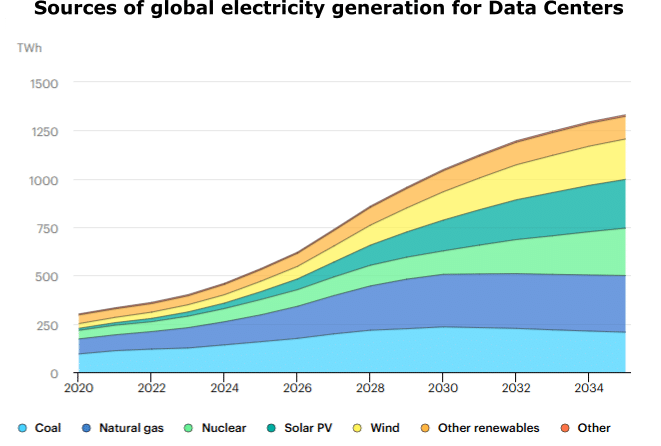
Over the same time horizon, in the next five years, this sector is projected to more than double its current consumption and reach 945 TWh by 2030, close to 3% of expected global consumption in that year. This growth is unprecedented and reflects the confidence investors have in this market over the long term.
Meeting Data Center demand
Given these expectations, data centers pose a complex challenge for the energy transition. Their high energy consumption and the need to operate twenty‑four hours a day can strain the system’s ability to maintain supply while simultaneously meeting sustainability targets.
Such is the scale of demand from these centres that some of the largest companies are seeking their own generation. Microsoft is in the process of reopening a nuclear power plant in the United States solely for its data centers, and other competitors such as OpenAI have expressed interest in nuclear energy generation.
Today, the largest source of electricity for data centers is coal (30%), mainly due to contributions from China, followed by renewables (27%), natural gas (26%) and nuclear energy (15%). In 2024, CO₂ emissions linked to data center consumption were estimated at around 220 million tonnes, and by 2035 they are expected to rise to 320 million tonnes.
Up to 2030, natural gas and coal are expected to cover 40% of demand from these centres. Moreover, they act as drivers for these fuels, creating demand and financing new plants.
Sustainability in the use of Data Centers
That said, renewables are the energy sources registering the greatest increase in use by data centers. Some of the largest Data Center developers are also investing in renewable energy generation and signing PPA with renewable generators, and by 2035 the balance is expected to shift away from coal‑fired plants.
In the long term, renewable energy is expected to take over and supply most of data center demand by 2035. One of the factors slowing the roll‑out of renewable energy is the long queues for grid connection.
Efforts towards more sustainable Data Centers
In Europe, a strategic roadmap is already being prepared, to be published in 2026, setting out potential solutions to the current and future surge in demand.
There are already several key points to consider when integrating data centers alongside the new demand they bring.
The European Union highlights the importance of digitalising the electricity market as one of its priorities. The aim is to increase system efficiency in order to achieve the sustainable integration of data centers.
Another crucial piece of the puzzle will be energy storage. Hybridisation with renewable plants would allow meeting demand during periods of low production, using surplus energy from peak production hours stored in batteries.
In addition, the introduction of batteries into the electricity grid will increase flexibility, reduce losses and help maintain a stable supply.
AleaSoft Energy Forecasting’s forecasts and analyses for renewable energy and storage projects
AleaSoft Energy Forecasting, through its AleaGreen division, provides long‑term forecasts, which are essential for financing renewable energy projects and signing PPA, asset valuation and the development of hedging strategies. AleaGreen’s services include production forecasts for different types of renewable plants, together with corresponding price forecasts, as well as forecasts for guarantees of origin.
In addition, the AleaStorage division analyses the viability of battery storage projects, both stand‑alone and hybridised with renewable plants, estimating their long‑term revenues and profitability, optimising their operation and providing tailored analyses for different business models.
Source: AleaSoft Energy Forecasting.