


AleaSoft Energy Forecasting, April 17, 2026. The European electricity system is entering a new phase and this can already be observed in market behaviour. This is not a matter of forecasts or long‑term plans. Volatility in energy prices, driven by geopolitical factors and supply uncertainty, has intensified in recent months. That volatility is now directly affecting the electricity market. However, beyond fuels, the most significant change is taking place within the electricity system itself.
Last Thursday, March 16, AleaSoft Energy Forecasting held the 65th edition of its monthly webinar series, which has been running for over six years. On this occasion, the event featured Raúl García Posada, Director of the Spanish Energy Storage Association (ASEALEN), and Oriol Saltó i Bauzà, Associate Partner at AleaSoft. The webinar and discussion panel in Spanish were moderated by Antonio Delgado Rigal, CEO of AleaSoft, who led the conversation on the current state of energy storage, the regulatory framework surrounding it and the prospects for the coming months.
The European market has already changed: the growing role of flexibility
One of the clearest indicators of this transformation is the increase in hours with zero or negative prices, a phenomenon that reflects a structural imbalance between production and demand. The strong penetration of renewable energy, combined with demand that is not growing at the same pace and limited capacity to manage surpluses, is shaping a system that at certain times cannot absorb all the energy produced.
Storage: from complement to key component
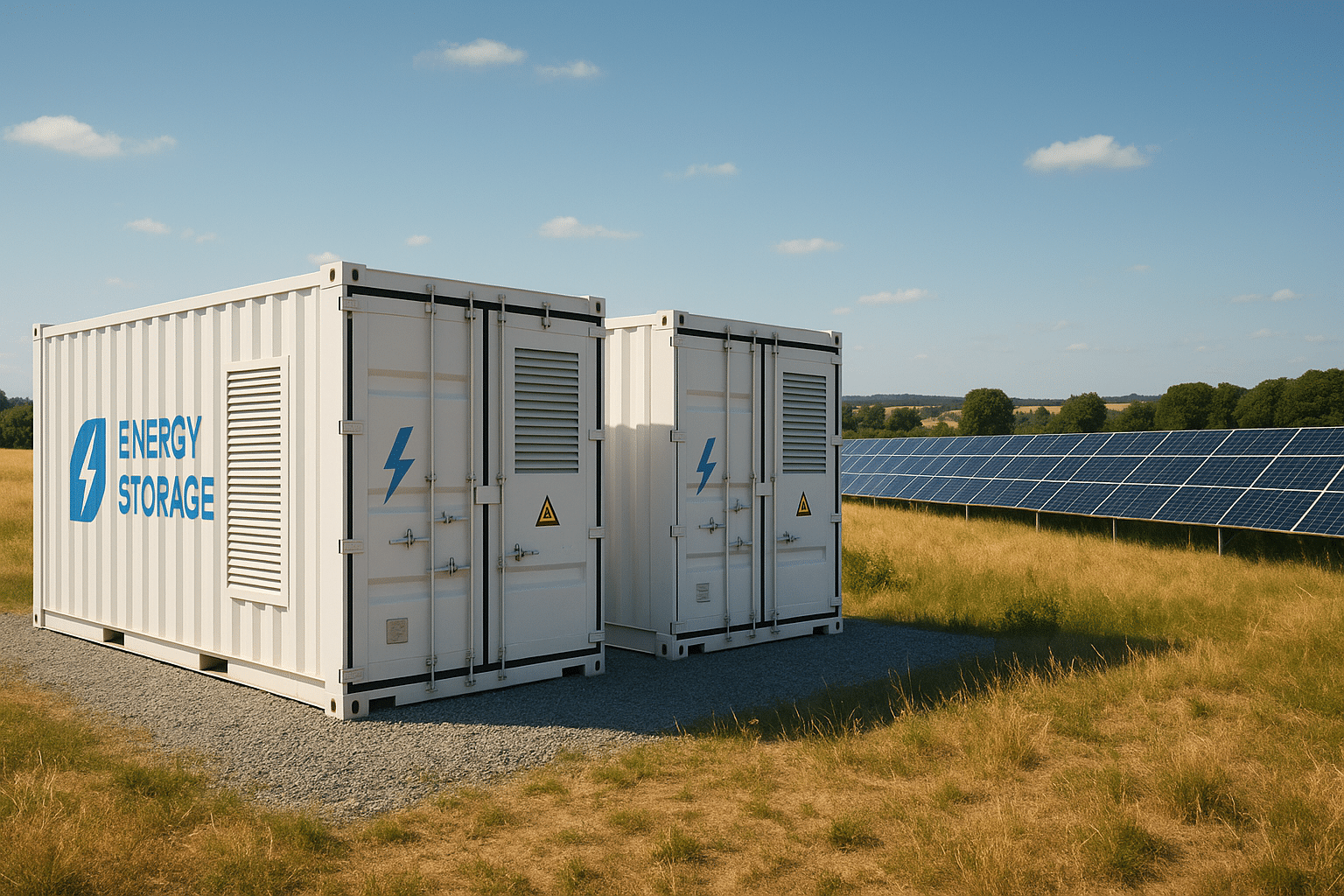
In this context, energy storage is taking on a leading role as a matter of market logic. Batteries make it possible to capture value in an environment where price differences between hours are increasingly large, transforming energy arbitrage from a profit optimisation option into a central element of the system. Buying energy when prices are low and selling it during higher‑value hours is becoming established as a key strategy, even with a single daily cycle in markets such as Spain.
Renewable energy and loss of value: the need for hybridisation
This new scenario also directly affects renewable power plants. Increased production, particularly solar, means that a growing share of energy is sold during low‑price periods, reducing the real value or captured price of projects. In response, hybridisation with storage is emerging as the most direct solution, enabling production to be shifted to higher‑value hours and improving profitability.
Demand begins to respond
At the same time, the role of the consumer is becoming more important. The market is increasingly clear about consumption patterns. The gap between average prices and peak‑hour prices, known as the evening peak premium, indicates that consuming at certain times can be significantly more expensive. This opens the door to more active demand, capable of optimising consumption according to market conditions.
A critical point: how to interpret the market
As the system becomes more complex, the risk of misinterpretation also increases. The use of simplified benchmarks, such as low‑liquidity long‑term futures markets, can lead to misleading conclusions. The market is no longer linear, and its analysis requires advanced tools adapted to this new reality.
Spain facing the storage challenge: between momentum and execution
Meanwhile, Spain is advancing its own development of storage with ambitious targets, such as reaching 22.5 GW of storage capacity in the coming years.
This growth is supported by European funding, including programmes such as NextGen and ERDF funds, as well as specific support for hybrid and stand‑alone projects, which has generated a significant project pipeline and strong investor interest.
The structural limit: the grid
However, the main challenge does not lie in financing or technology, but in grid access capacity. In just a few years, there has been a very significant increase in capacity under development and already granted, making the grid the main bottleneck in the system.
An evolving regulatory framework
The regulatory framework is also evolving to adapt to this new environment, incorporating more flexible access, simplified procedures and recognition of storage. However, key elements still need to be defined, such as the role of the independent aggregator or the full integration of storage into self‑consumption schemes.
Flexibility and security of supply
System adequacy analyses show tensions in certain scenarios, reinforcing the role of storage not only from an economic perspective but also operationally, making it essential for ensuring security of supply.
At the same time, the market is beginning to value flexibility, as demonstrated by the growth in demand response services, with more than 1700 MW awarded in 2026.
The transition towards a new market
In short, the European electricity market is already pointing the way towards a system with greater volatility, more hours of extreme prices and an increasing value placed on flexibility. In this environment, energy storage has ceased to be a future option and has become an essential element of the present.
Spain has defined targets, available funding and a developing regulatory foundation, but the challenge now lies in execution. Resolving grid bottlenecks, completing the regulatory framework and enabling the real integration of storage and demand will be decisive factors in consolidating this new energy model.
AleaSoft Energy Forecasting’s analysis on the prospects and opportunities in European energy markets and storage
On May 21, 2026, at 10:00 CET, AleaSoft Energy Forecasting will hold the 66th webinar in its monthly series. The session will focus on the effects of the transformation of European markets, the role of storage and how energy storage will be affected by system changes.
The webinar will feature Alejandro Diego Rosell, a consultant and communicator in the energy sector, with whom the prospects for European energy markets and the role of storage will be analysed.
In this context, it will also examine how energy storage, particularly batteries, is positioning itself as an essential element for integrating renewable energy into the European market.
Source: AleaSoft Energy Forecasting.