


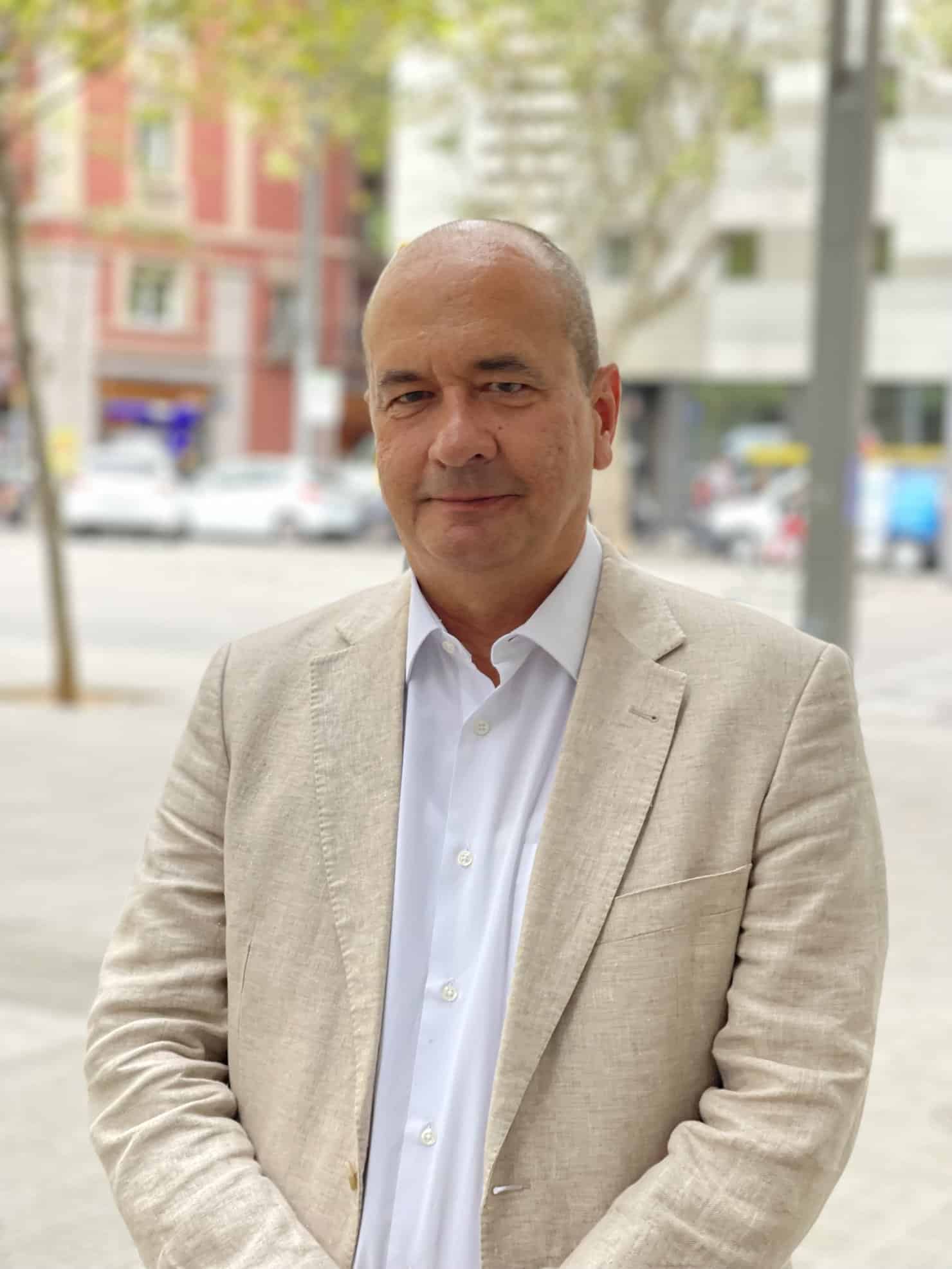
AleaSoft Energy Forecasting, September 25, 2026. Interview by Javier Monforte, of Revista Energética, with Antonio Delgado Rigal, PhD in Artificial Intelligence, founder and CEO of AleaSoft Energy Forecasting.
What will be the main factors shaping the behaviour of electricity markets in Spain and Europe until the end of 2026?
We will continue to see volatility from now until the end of the year. Gas and CO2 prices, the geopolitical situation, temperatures and wind and hydroelectric energy production will remain important factors. The recent rise in gas prices has pushed European electricity market prices up again and gas will remain a source of uncertainty.
In Spain, the large volume of photovoltaic generation during the central hours of the day also carries a lot of weight. Looking at how much renewable capacity is being installed is no longer enough. Demand, storage and the grid also need to grow to absorb it. That is why we will see more hours with very low or negative prices and other hours, especially when solar energy production disappears, with higher prices. The hourly profile is becoming increasingly important.
To what extent will demand growth be decisive for the balance of the system and for prices in the medium term?
Enormously. For a long time, the debate focused on installing more renewable generation. Now we also need electricity consumption to grow, driven by the electrification of transport and industry, heat pumps and data centers.
What matters is how much it grows, and also when and where. Flexible demand that consumes during hours of high solar or wind energy production can contribute a great deal to the system. If it is concentrated in certain areas and hours, it can create new bottlenecks. Negative prices do not mean there is a surplus of renewables. They often indicate a lack of flexible demand to take advantage of them.
What is the current situation of energy storage in Spain and what challenges does it face, behind and in front of the meter?
Energy storage is entering a decisive phase. In Spain there is a large portfolio of battery projects with permits granted or in process, although installed capacity remains small, at around 252 MW. Spain’s National Integrated Energy and Climate Plan (NECP) sets a target of 22.5 GW of storage by 2030, including the different technologies. The challenge now is to make these projects financeable and get them built.
The problem with batteries is no longer technological. The big challenge is knowing where their revenues will come from over the next fifteen or twenty years. They can obtain them from arbitrage, intraday markets, balancing services, the active demand response service (SRAD) and, in the near future, hopefully, the capacity market. But those revenues will change as thousands of additional megawatts come online, so revenue forecasting and bankability are essential.
There is also a lot of potential behind the meter, especially with industrial and commercial self-consumption. Procedures need to be simplified and its participation in flexibility markets and services made easier.
Is there a solution to grid congestion and to the difficulties in connecting new generation and demand?
Yes, but it requires investment and making better use of the grid. Investment will be needed in transmission and, above all, in distribution, but we also need digitalisation, flexible access, storage and active demand management.
In addition, generation and demand have been planned separately for too long. There are renewable projects that cannot get connected and, at the same time, industries or data centers without available capacity. Spain can turn its renewable advantage into an industrial advantage, but to do so it needs the grid.
Can the electricity system afford the planned nuclear closure schedule?
I think extending Almaraz until 2030 was a logical decision, and it forces us to reconsider the rest of the schedule. This is not a debate about nuclear versus renewables. Spain needs much more renewable energy, but it also needs firm capacity while it develops storage, flexibility and interconnection.
If we close safe nuclear power plants before sufficient alternatives are available, part of that production will have to be replaced and, at certain hours, that may mean more gas-fired generation, higher prices and higher emissions. Nuclear power does not have to continue indefinitely, but the order matters: the transition should replace a technology once the alternatives already exist.
If the nuclear schedule were revised, what regulatory or market changes would be needed?
The first step would be to review taxation. If a safe nuclear power plant adds value to the system because it produces electricity continuously and without direct CO2 emissions, it would make no sense to make its operation economically unviable through excessive tax pressure.
That does not mean artificially guaranteeing its profitability. The reasonable approach would be to combine taxation compatible with its continued operation with market mechanisms that value firm capacity, availability and security of supply. The future capacity market can be part of the solution. The question should be which option is most efficient for the system as a whole.
What impact would greater interconnection with France have?
It would be clearly positive. When Spain has renewable surpluses, we could export more, reducing curtailment and extremely low prices, while, when renewable production is low, we could import more. That would help reduce volatility and bring the prices of the Spanish market closer to European levels.
The Bay of Biscay interconnection, which will raise exchange capacity to approximately 5 GW, will be an important step forward. In addition, greater interconnection would make it possible to use Spain’s excellent solar and wind resources as export capacity too.
What consequences can zero or negative prices have for investment and for the future Spanish energy mix?
These episodes show how the market is changing. Having some hours with zero or negative prices is not necessarily bad: it indicates that there is plenty of electricity available. The problem arises when those hours are frequent and significantly reduce renewable revenues.
Asking how many MWh a plant produces is no longer enough. The question is how much they are worth at the time they are produced. That is why the value of batteries, hybridisation, demand management and flexible consumers is increasing. PPAs will also have to give more weight to the hourly profile. In those hours we do not need to produce more electricity. We need to store it, consume it, transform it or export it.
What impact will data centers, digitalisation and artificial intelligence have on the Spanish electricity system?
They could become one of the major drivers of electricity demand growth. Data centers need large amounts of electricity for many hours, which can fit well with a system with growing renewable production.
Spain has advantages when it comes to attracting these investments, but the main problem is the grid. If we resolve access and connection, data centers, industrial electrification and other large consumers can be an extraordinary opportunity to use our energy advantage and attract industrial and technological investment.
Which measures should be prioritised in the new regulation on self-consumption and distributed storage?
The first thing is to simplify. Spain has made great progress in self-consumption, but some procedures are still too complex, especially for collective self-consumption. It is also important to facilitate storage associated with consumers.
But we must look beyond traditional self-consumption. A battery in a factory, a shop or a home can also provide services to the system. In the future we will have millions of distributed and flexible resources. If we manage to aggregate them and facilitate their participation in the markets, we will have an enormous amount of distributed flexibility capacity.
AleaSoft has more than two decades of experience developing forecasting models for energy markets. How has the application of AI in your services evolved, what new needs are your clients raising, and which technology trends will shape the future of energy analytics?
We started using artificial intelligence for energy forecasting in 1999. From the outset we developed a hybrid methodology that combines neural networks, statistical time series models and regression. Since then, computing power, the amount of available data and the speed at which models can be developed and validated have all increased.
Above all, though, clients’ questions have changed. Previously they focused on the price of electricity for the following week or year. Today they ask us about a battery’s revenues over twenty years, what will happen when many gigawatts of storage come online, or what the probability is of reaching certain revenue levels. Artificial intelligence now goes beyond price forecasting, and is also used to quantify risks and support investment decisions.
We are now entering the era of generative artificial intelligence and agents. At AleaAI Lab, our artificial intelligence laboratory, we are developing agents, automations and new solutions capable of interacting with models, databases and analysis tools. The future lies in combining artificial intelligence, statistical models, expert knowledge and large amounts of data to anticipate an increasingly complex energy system.