


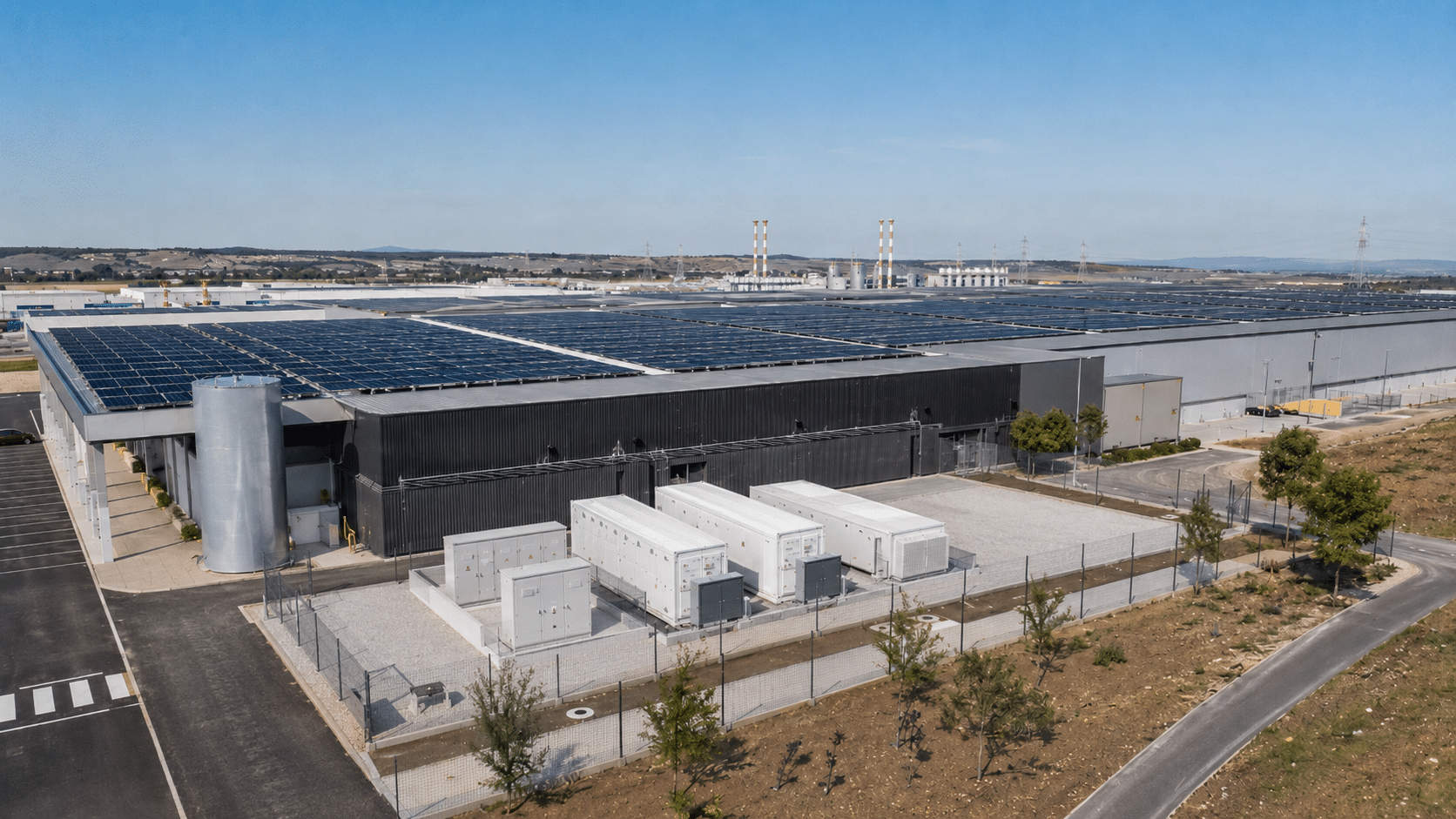
AleaSoft Energy Forecasting, May 8, 2026. The growth of renewable energy and the emergence of zero and negative prices are driving large consumers and electro‑intensive industries to adopt a more active approach to energy management. Batteries are becoming a strategic tool to optimise costs, reduce market exposure, maximise self‑consumption and strengthen operational resilience.
A new context for industrial energy management
The increasing penetration of renewable energy in the electricity market, together with the more frequent occurrence of zero and negative prices, is driving a significant shift in the way large consumers manage their energy. In this new context, batteries are no longer merely a complementary technological option, but are becoming a strategic tool for competitiveness, flexibility and cost control.
For years, many electro‑intensive industries have maintained a relatively passive approach to energy management, based mainly on supply contracts with retailers, partial hedging strategies and limited ability to decide when to consume electricity. However, developments in the electricity market are changing this approach. Hourly price volatility, the growth of renewable energy generation and the need to optimise energy costs are encouraging the adoption of more active strategies.
Storage as an optimisation tool
Energy storage enables large consumers to store energy during periods of low or negative prices and use it when prices are higher. This capability opens the door to more sophisticated optimisation of electricity costs and reduces direct exposure to market volatility.
In addition, batteries can facilitate participation in balancing services, new capacity and flexibility markets or specific mechanisms such as SRAD. In this way, storage not only helps reduce costs, but can also generate new sources of revenue or operational value for industrial consumers.
Hybridisation with renewable self‑consumption and operational resilience
Another particularly relevant area is the hybridisation of batteries with renewable self‑consumption installations, especially photovoltaic systems. According to Red Eléctrica data, there are 5 MW of batteries associated with self‑consumption installations. In these cases, batteries make it possible to maximise the use of self‑generated electricity, avoid curtailment and improve the economic value of the energy produced.
At the same time, storage can strengthen the operational resilience of industrial facilities by providing greater control against price spikes, grid constraints or stress situations in the electricity system. This responsiveness is especially valuable in an environment of increasing complexity and volatility.
Profitability also depends on operational intelligence
The profitability of a battery does not depend solely on its technical characteristics or investment cost. The real value of the asset is closely linked to the quality of the forecasts, operational models and optimisation algorithms used.
Without long‑term hourly forecasts for prices, demand and renewable energy generation, there is a risk of overestimating revenues, underutilising the battery or making financially unsound investment decisions. Software, analytics and operational strategy are just as important as the hardware itself.
From the investment decision to value maximisation
In this scenario, the question for large consumers is no longer simply whether installing a battery is worthwhile. The debate is shifting towards how to maximise its value across all possible markets and what level of operational intelligence should be used to manage the asset.
The electrification of demand, the growth of data centers and competitive pressure on energy costs all point towards an acceleration of this transition in the coming years. Industrial consumers that adopt an active storage‑based strategy earlier will be able to gain a structural advantage in an increasingly complex electricity market.
The role of forecasts and advanced models
To capture the full potential value of a battery, it will be essential to size the system correctly, rigorously estimate its potential revenues and design operational models capable of optimising participation across different markets.
AleaSoft Energy Forecasting is collaborating with large consumers and electro‑intensive industries on the optimal design of storage systems, combining long‑term hourly price forecasts, multi‑market revenue analysis and advanced operational models. The aim is to support robust and bankable investment decisions focused on maximising the real profitability of batteries in the new energy environment.
Source: AleaSoft Energy Forecasting.