


AleaSoft Energy Forecasting, September 1, 2026. In August 2026, monthly prices rose in all the main European electricity markets. The increase in gas and CO2 emission allowance prices, together with the monthly decline in solar energy production and lower wind energy production in most markets, drove this trend. Even so, solar PV production reached record highs for an August in every market analysed, while Germany and France broke wind energy production records for the month.
Solar photovoltaic and wind energy production
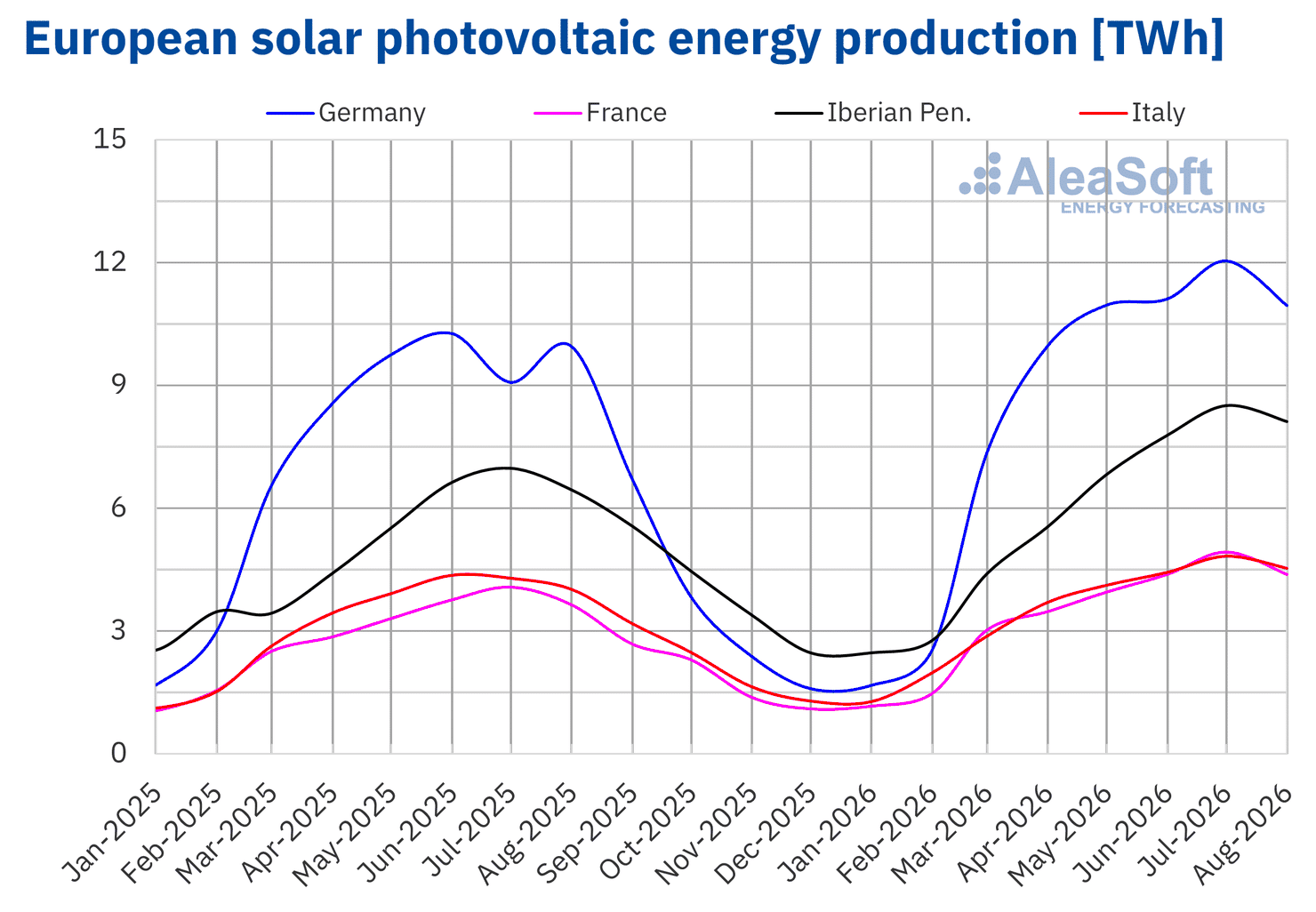
In August 2026, solar PV production increased in the main European electricity markets compared with the same month of the previous year. Spain registered the largest percentage growth, with 28%, and Portugal the smallest, with 7.8%. In France, Germany and Italy, production grew by 20%, 13% and 12%, respectively.
Compared with July 2026, solar PV production fell in all the main European electricity markets analysed. Portugal registered the largest drop, with 12%, followed by France, with a decrease of 11%. In Germany, Italy and Spain, production fell by 9.1%, 6.1% and 3.7%, respectively.
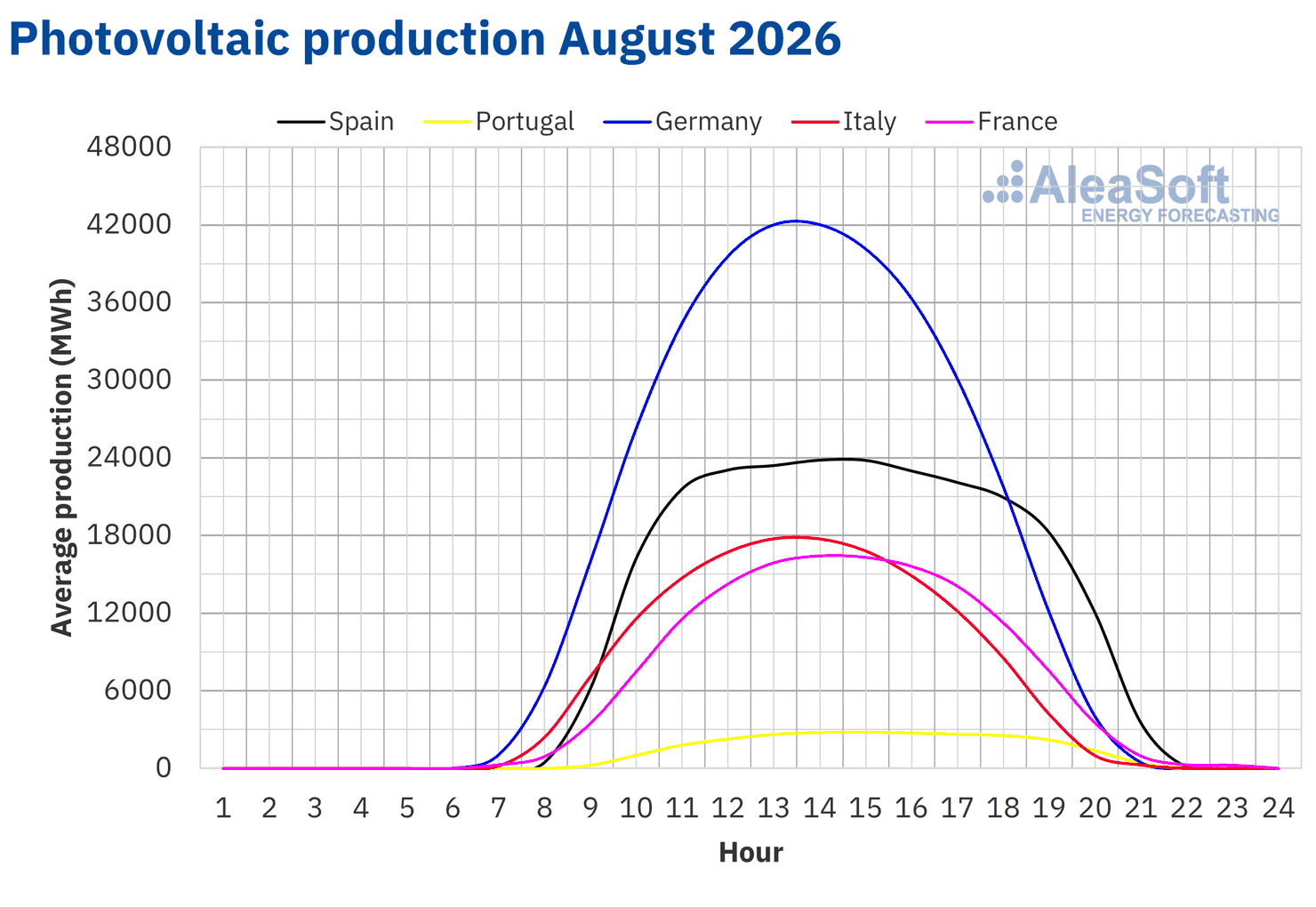
In August 2026, monthly solar PV production reached record highs for an August in all the European electricity markets analysed. Generation stood at 10 953 GWh in Germany, 7327 GWh in Spain, 4529 GWh in Italy, 4382 GWh in France and 786 GWh in Portugal.
Year-on-year growth in installed capacity favoured these record highs in solar PV production. Between August 2025 and August 2026, installed solar PV capacity in Spain increased by approximately 7770 MW, not including self-consumption, according to an estimate based on data from Red Eléctrica.
 Source: Prepared by AleaSoft Energy Forecasting with data from ENTSO-E, RTE, REN, Red Eléctrica and TERNA.
 Source: Prepared by AleaSoft Energy Forecasting with data from ENTSO-E, RTE, REN, Red Eléctrica and TERNA.
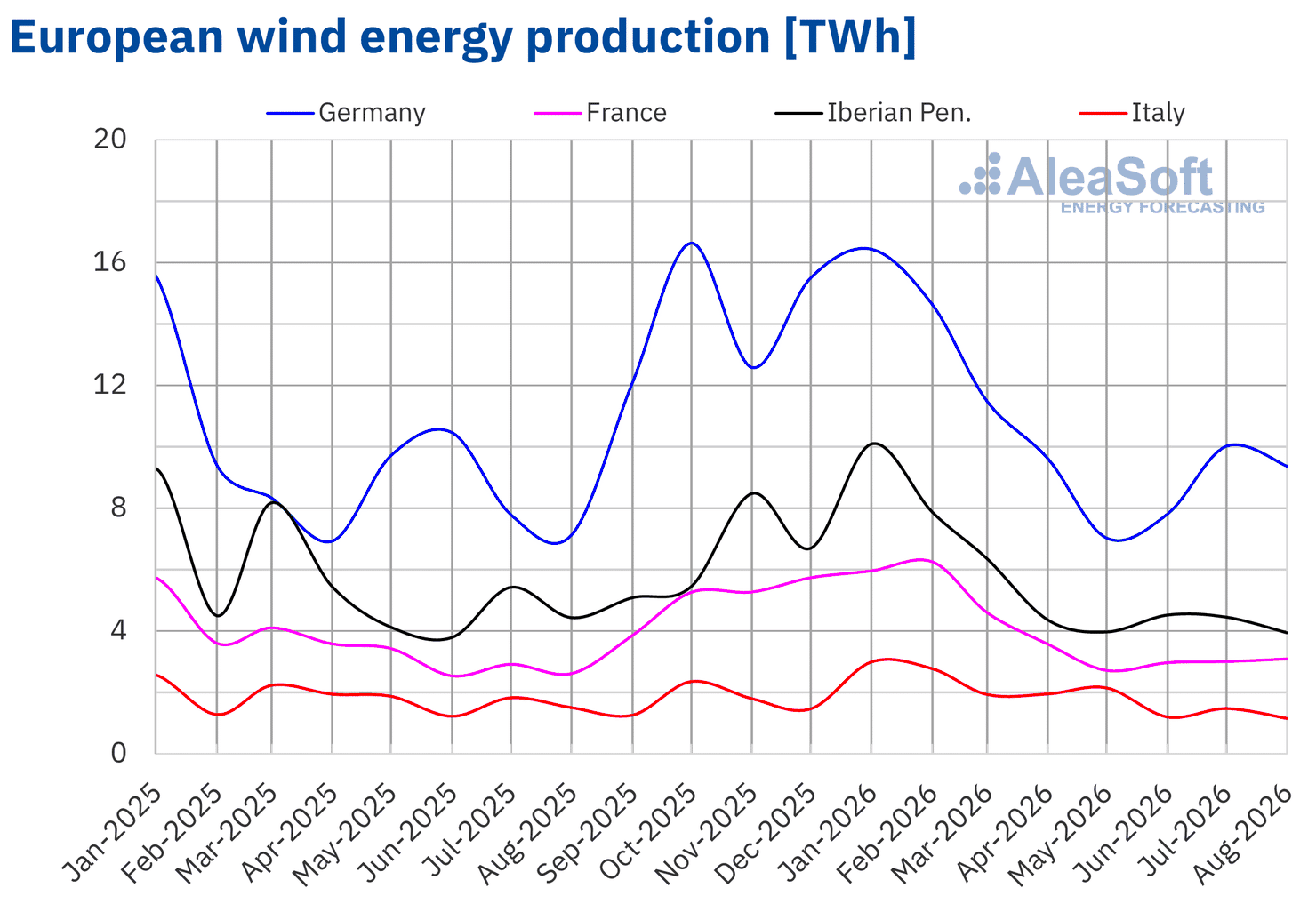
In August 2026, wind energy production increased year-on-year in Germany and France. Germany registered the largest growth, with 31%, while France saw an increase of 18%. In contrast, the Italian, Spanish and Portuguese markets registered declines in wind generation. Italy presented the largest drop, of 23%, while in Spain and Portugal production fell by 11% and 10%, respectively.
Compared with the previous month, wind energy production increased in Portugal and France, by 16% and 2.9%, respectively. In contrast, wind generation fell in Italy, Spain and Germany. Italy registered the largest drop, of 22%, followed by decreases of 16% in Spain and 6.5% in Germany.
In Germany and France, wind energy production reached record highs for an August, with 9371 GWh and 3090 GWh, respectively.
Between August 2025 and August 2026, installed wind capacity in mainland Spain increased by approximately 353 MW, not including self-consumption, according to an estimate based on data from Red Eléctrica.
 Source: Prepared by AleaSoft Energy Forecasting with data from ENTSO-E, RTE, REN, Red Eléctrica and TERNA.
Electricity demand
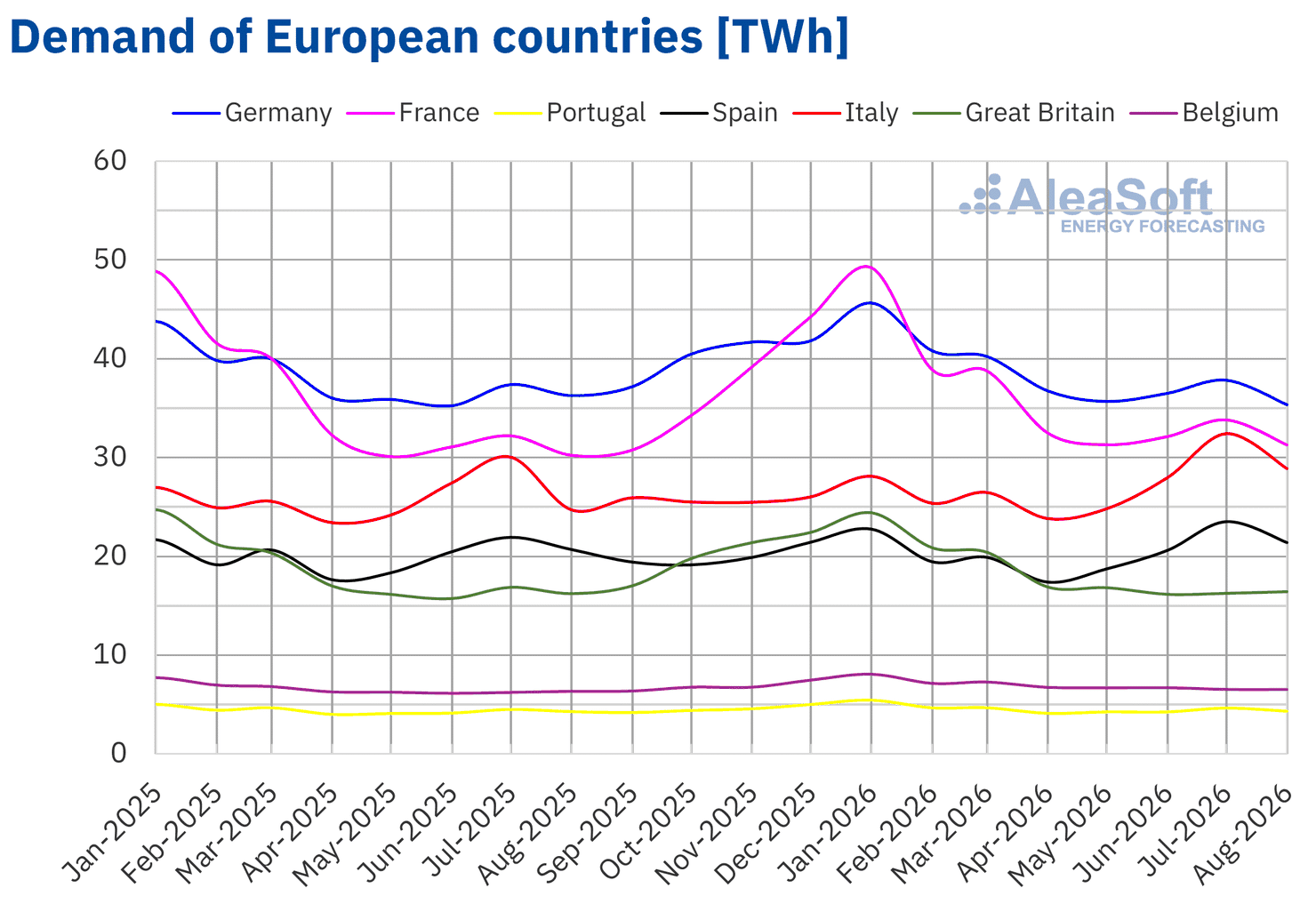
In August 2026, electricity demand increased year-on-year in most of the main European electricity markets. Italy registered the largest increase, of 16.9%, while Belgium and France posted rises of 3.6% and 3.5%, respectively. In Spain, Great Britain and Portugal, demand increased by 3.2%, 1.2% and 1.0%, respectively. In contrast, demand fell by 2.5% in Germany.
Compared with July 2026, demand fell in most of the main markets of electricity in Europe analysed, in line with the seasonality typical of August. Italy registered the largest drop, of 11%, followed by Spain, with a decrease of 9.0%. In France, Portugal and Germany, demand fell by 7.5%, 6.8% and 6.5%, respectively, while in Belgium it fell by 0.1%. In contrast, demand increased by 1.0% in Great Britain.
In August 2026, electricity demand reached record highs for an August in Italy and Portugal, with 28 895 GWh and 4301 GWh, respectively.
The average temperatures were higher than those of August 2025 in Italy, France, Germany, Belgium and Great Britain. Italy registered the largest increase, of 2.8°C, followed by France and Germany, with rises of 1.7°C in both cases. In Great Britain and Belgium, temperatures increased by 0.8°C and 0.2°C, respectively. In contrast, average temperatures fell in Spain and Portugal, with drops of 0.1°C and 0.5°C, respectively.
Compared with the previous month, average temperatures increased in Italy and Germany by 0.8°C and 0.2°C, respectively. In the rest of the markets analysed, temperatures fell, with drops ranging from 0.4°C in France to 1.1°C in Great Britain.
 Source: Prepared by AleaSoft Energy Forecasting with data from ENTSO-E, RTE, REN, Red Eléctrica, TERNA, National Grid and ELIA.
European electricity markets
In August 2026, the average monthly price of the European electricity markets exceeded €118/MWh in most of the main European electricity markets. The Nordic market was the exception, with an average of €77.02/MWh, well below the rest. In contrast, the Italian and British markets posted the highest prices, of €180.00/MWh and €149.80/MWh, respectively. In the rest of the European electricity markets analysed by AleaSoft Energy Forecasting, averages ranged between €118.24/MWh in the Spanish market and €129.32/MWh in the Belgian market.
Compared with July, average prices rose in all the European electricity markets analysed by AleaSoft Energy Forecasting. The Nordic market registered the largest percentage price increase, of 50%. The French market registered the second largest increase, of 29%. In the rest of the markets, prices rose by between 13% in the Spanish and Portuguese markets and 20% in the German market.
Comparing average prices in August with those registered in the same month of 2025, prices also rose in all the European electricity markets analysed. The French market recorded the largest percentage increase, of 126%, followed by the Nordic market, with a rise of 111%. In the rest of the markets, price increases ranged between 65% in the German and Italian markets and 87% in the Belgian market.
As a result of the price rises, in August 2026 the Italian market reached its highest average since January 2023. The Belgian, British, Spanish, French and Portuguese markets registered their highest monthly prices since March 2023. The German and Dutch markets reached their highest prices since March 2025. Meanwhile, the average price in the Nordic market was the highest since March 2026.
The increase in gas prices and CO2 emission allowance prices compared with July, together with the decline in solar energy production and lower wind energy production in most markets, favoured the price increase in the European electricity markets compared with the previous month.
Compared with the same month of 2025, the increase in gas and CO2 emission allowance prices, the increase in electricity demand in most markets, and the decline in wind energy production in the Iberian Peninsula and Italy drove the year-on-year price increases in the European electricity markets.
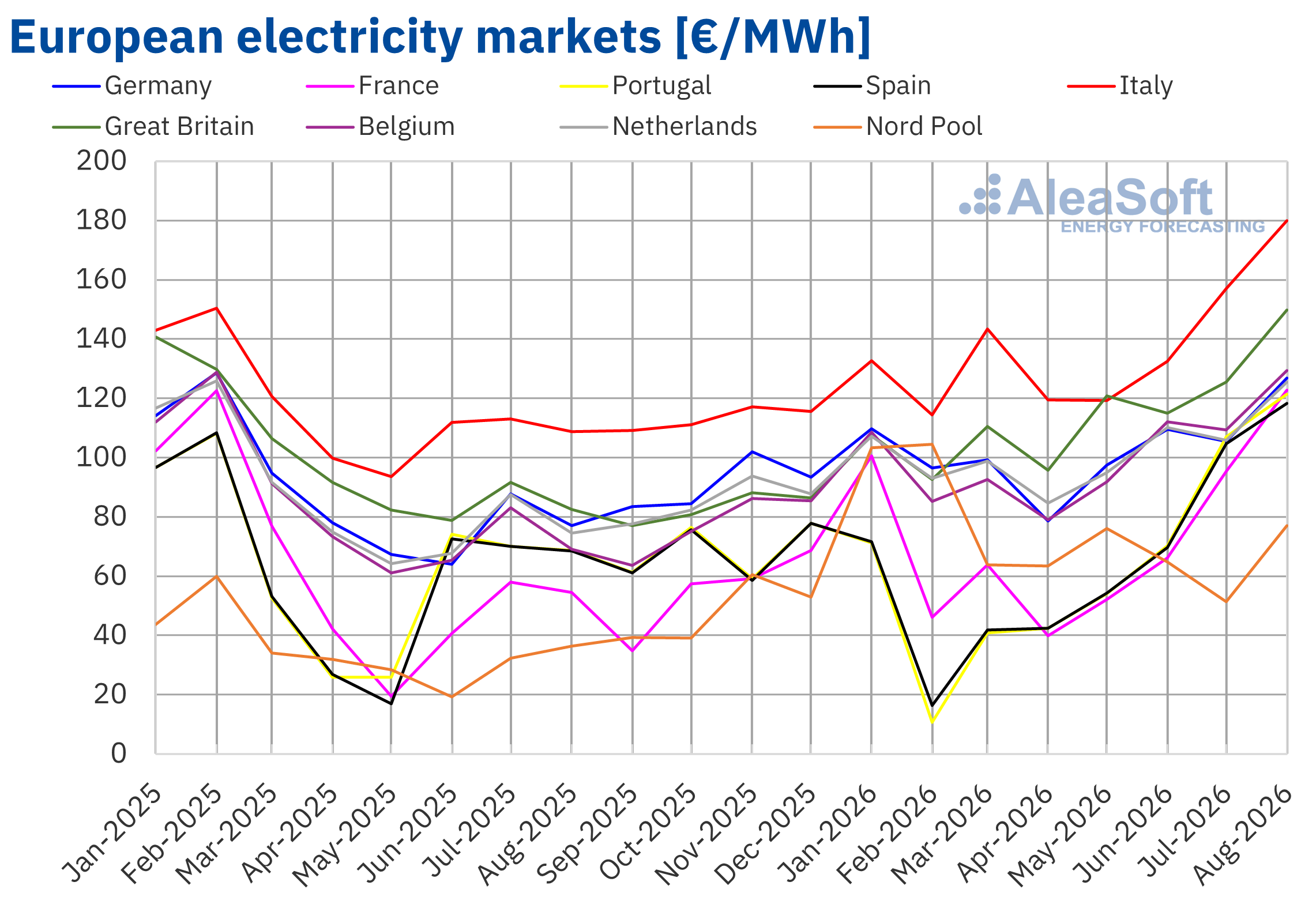 Source: Prepared by AleaSoft Energy Forecasting with data from OMIE, RTE, Nord Pool and GME.
Brent, fuels and CO2
Futures for Brent crude oil for the Front-Month contract on the ICE market registered an average price of $88.08/bbl in August 2026. This figure exceeded that of July 2026 by 4.9%, when it stood at $83.97/bbl, and was 31% higher than in August 2025, when it reached $67.26/bbl.
During August, tensions between the United States and Iran over the Strait of Hormuz continued to affect the evolution of Brent crude oil futures prices. Cross-attacks between the two countries and disruptions to tanker traffic through the strait favoured the price increase compared with the previous month.
As for TTF gas futures on the ICE market for the Front-Month contract, the average price registered in August 2026 was €62.14/MWh. This figure was 15% higher than in July 2026, when the average stood at €53.99/MWh. Compared with August 2025, when the average price was €32.70/MWh, the increase reached 90%. Furthermore, according to the data analysed by AleaSoft Energy Forecasting, the average for August 2026 was the highest since February 2023.
In August, low levels of European gas reserves, well below the seasonal average of the last five years, strongly pushed up TTF gas futures prices. Tensions in the Strait of Hormuz and their implications for liquefied natural gas supply also contributed to this increase. In addition, lower hydroelectric and nuclear production due to drought and high temperatures required greater use of combined-cycle power plants, further increasing pressure on gas demand.
As for the futures on CO2 emission allowances on the EEX market for the December 2026 reference contract, the average price reached €82.37/t in August. This figure was 1.4% higher than that registered in July 2026, of €81.26/t. It also exceeded the August 2025 average by 12%, which was €73.75/t. According to the data analysed by AleaSoft Energy Forecasting, in August 2026, the average monthly price was the highest since February of the same year.
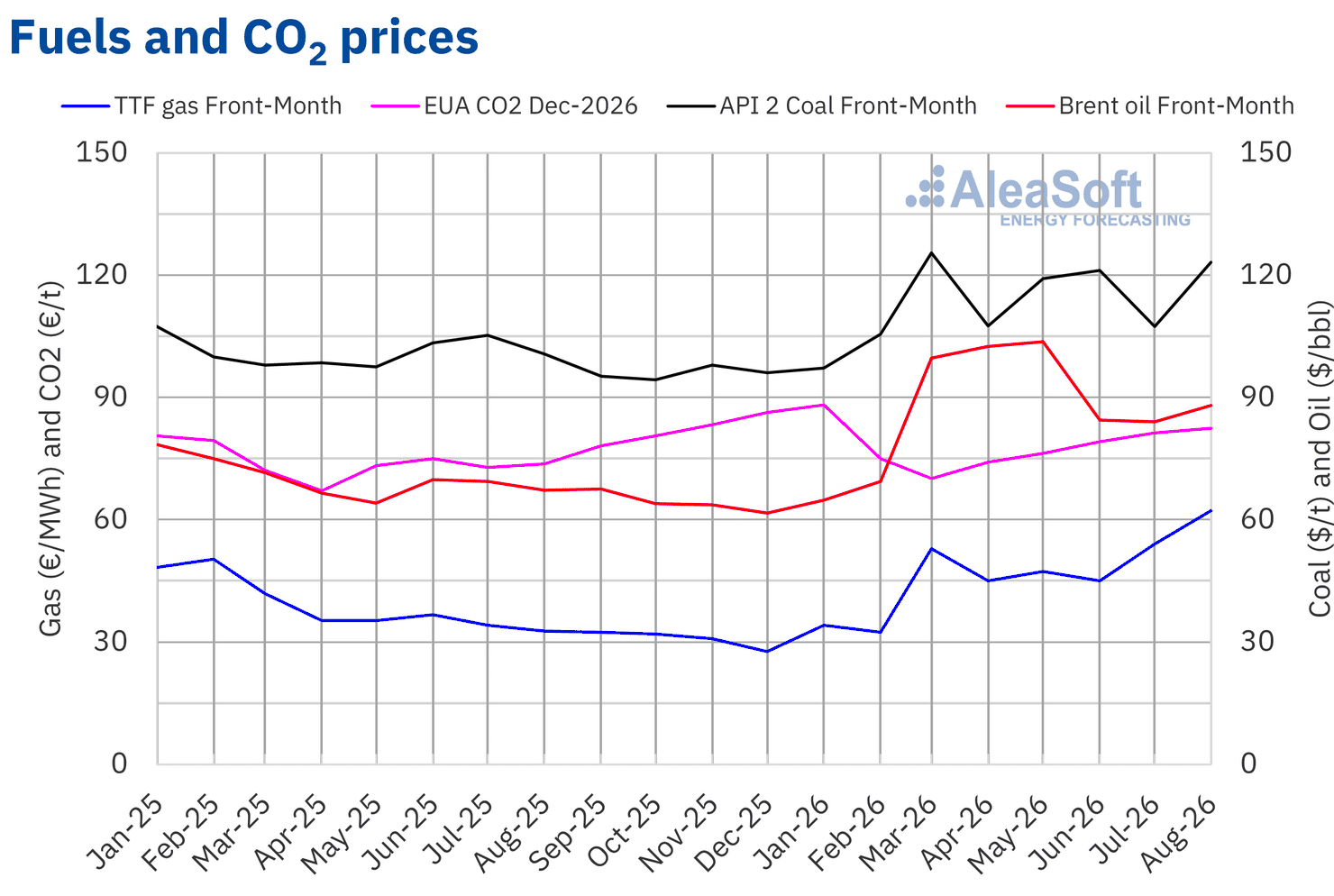 Source: Prepared by AleaSoft Energy Forecasting with data from ICE and EEX.
AleaSoft Energy Forecasting analysis for energy storage
To achieve a profitable and bankable investment, energy storage projects need to identify the configuration that maximises revenues, anticipate the evolution of arbitrage opportunities and participation in balancing services, assess the impact that the growing penetration of batteries will have on those revenues, and define the optimal sizing for hybrid projects with renewable energies. These issues are especially relevant both in stand‑alone systems and in hybrid installations, such as solar PV or wind power plants with batteries.
To address these challenges for energy storage projects, forecasts from the AleaStorage division of AleaSoft Energy Forecasting help optimise the revenues, sizing and profitability of storage systems.
Source: AleaSoft Energy Forecasting.