


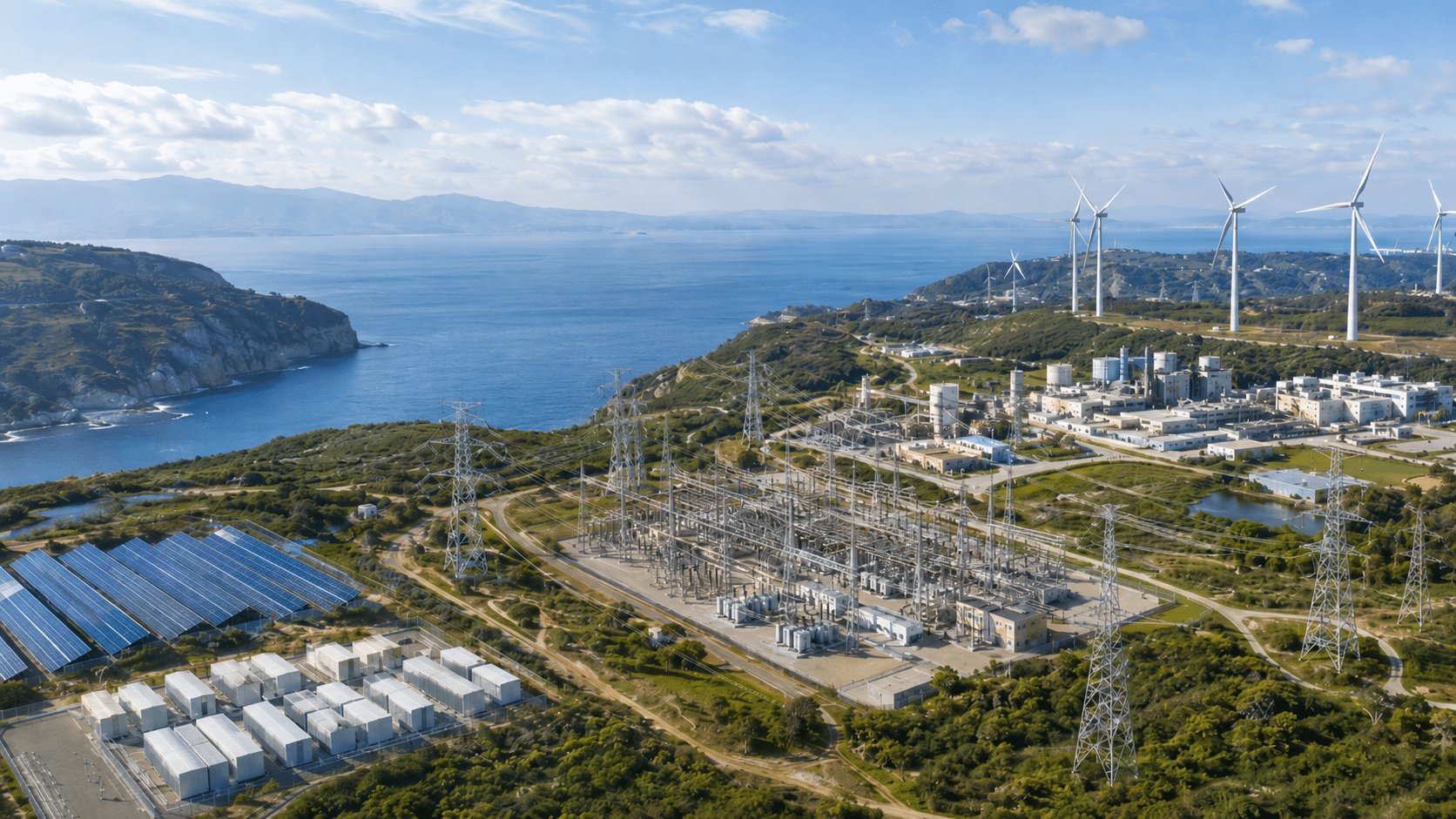
AleaSoft Energy Forecasting, July 31, 2026. The electrification of industry, transport and heating and cooling will be one of the main drivers of transformation of the electricity system. Its development will depend on the electricity grid, which often receives less attention than generation. The distribution grid, the transport grid and interconnections form three inseparable levels of the same transformation, and without coordinated investment in all three it will not be possible to integrate the full renewable potential.
The grid, the new limiting factor for the energy transition
During the first stage of the energy transition, efforts focused on increasing renewable generation capacity and accelerating the installation of wind energy and solar photovoltaic capacity. The next phase will be more complex, because the challenge is no longer to produce renewable electricity but to integrate it efficiently and distribute it to meet growing electricity demand. In many areas, the lack of access and connection capacity is already delaying industrial projects, energy storage facilities and charging points. Investment in electricity grids must anticipate the growth of generation and demand, because planning, authorisation and construction timeframes turn grid capacity into a limiting factor for decarbonisation and industrial competitiveness.
Distribution will move from passive infrastructure to an active platform
New industrial consumption, electric vehicles, heat pumps, electrical self-consumption, batteries and energy communities will all need to connect to electricity distribution networks. These networks were designed to carry electricity in a single direction, while the new electricity system will operate bidirectionally, with millions of consumers able to produce, store or inject electricity. The transformation will require new substations and lines, together with deep digitalisation through automation, advanced metering and real-time monitoring to anticipate congestion and make better use of available capacity.
The transport grid will be a strategic industrial infrastructure
Large wind and photovoltaic farms are installed where natural resources are best and land availability is greatest, areas that do not always coincide with urban and industrial centres. Electricity transport grids will need to connect this new generation geography with major consumption centres and, at the same time, integrate data centers, green hydrogen plants, large-scale storage and the electrification of transport. Developing renewables without expanding the grid in parallel causes congestion, generation restrictions and increased curtailment. Grid capacity will therefore become a decisive factor in attracting investment and must be understood as infrastructure for reindustrialisation, not merely as a cost to the system.
Interconnections will make it possible to exploit European complementarity
Wind, solar and hydroelectric production varies between countries and between hours, which is why interconnections are essential to exploit the complementarity of European resources. The greater the exchange capacity, the more room there will be to balance generation and consumption, reduce the curtailment of renewable energies, limit episodes of extreme prices and move towards genuine integration of European electricity markets. For Spain and Portugal, strengthening connections with the rest of Europe will be particularly relevant. The Iberian Peninsula has favourable conditions to become a major producer of renewable electricity and green fuels, but without sufficient interconnection capacity that production may remain confined to the Iberian market, with more curtailment and lower prices captured by renewables.
Storage, flexibility and grids are complementary solutions
Not all congestion needs to be resolved by building new lines, just as battery storage cannot replace every grid expansion that is needed. Batteries shift electricity from the hours of highest renewable production to periods of highest demand and provide balancing services. In turn, active demand management adapts part of consumption to available capacity, provided the necessary economic signals and regulation are in place. These solutions defer some investments, but the structural growth of renewable generation and electrified demand will equally require new lines, substations and interconnections.
The grid as the main strategic investment for decarbonisation
The decisive question is not whether the current grid is ready for electrification, but whether planning and investment will move forward with enough anticipation to build the grid that the new electricity system will need. There will be no electrification at the necessary pace without smarter distribution grids, no renewable reindustrialisation without robust transport grids, and no efficient European decarbonisation without sufficient interconnections. Renewable generation provides the energy and electrified demand allows it to be used, but it is the grid that determines that the two coincide at the right time and place.
Planning the grid with a long-term vision
Several years can pass between identifying a need and bringing a line or a substation into service, so waiting for congestion or connection requests to appear comes too late for the pace that electrification demands. It will be necessary to anticipate where new generation will be installed, which sectors will increase their consumption and where new industrial hubs will emerge. Electricity demand forecasts, renewable production forecasts and electricity market price forecasts are decisive for assessing scenarios and sizing investment, and regulation will need to accompany them with stable signals that allow capital to be mobilised.
Forecasts for decision-making and project financing
AleaSoft Energy Forecasting supports system operators, distribution companies, utilities, renewable developers, investors and funds and large consumers with electricity demand forecasts, renewable production and electricity market price forecasts for horizons ranging from the short to the long term, produced with a hybrid methodology that integrates Artificial Intelligence, time series and statistical models, backed by more than 27 years of experience in the energy sector. AleaGreen, the division of AleaSoft Energy Forecasting specialised in long-term energy forecasting, provides the bankable price forecasts that banks, funds and financial institutions use for the financing of renewable energy projects, PPA bankability analysis and the valuation of investments linked to grid reinforcement and the electrification of demand.
Source: AleaSoft Energy Forecasting