


AleaSoft Energy Forecasting, April 16, 2026. Electro‑intensive industry is facing a structural shift in its relationship with energy. In an increasingly renewable and volatile system, the key is no longer only to reduce consumption, but to strategically manage when, how and with what level of risk electricity is used, turning energy into a determining factor of competitiveness.
For decades, electricity has been just another operating cost for electro‑intensive industry, subject to optimisation but outside the strategic core of the business. However, this paradigm has changed. In the current electricity system, characterised by a high penetration of renewable energy and growing complexity, energy has become a determining element for business competitiveness. It is no longer enough to consume less; it is essential to decide when, how and with what level of risk energy is consumed.
Self‑consumption and hybridisation: from savings to strategy
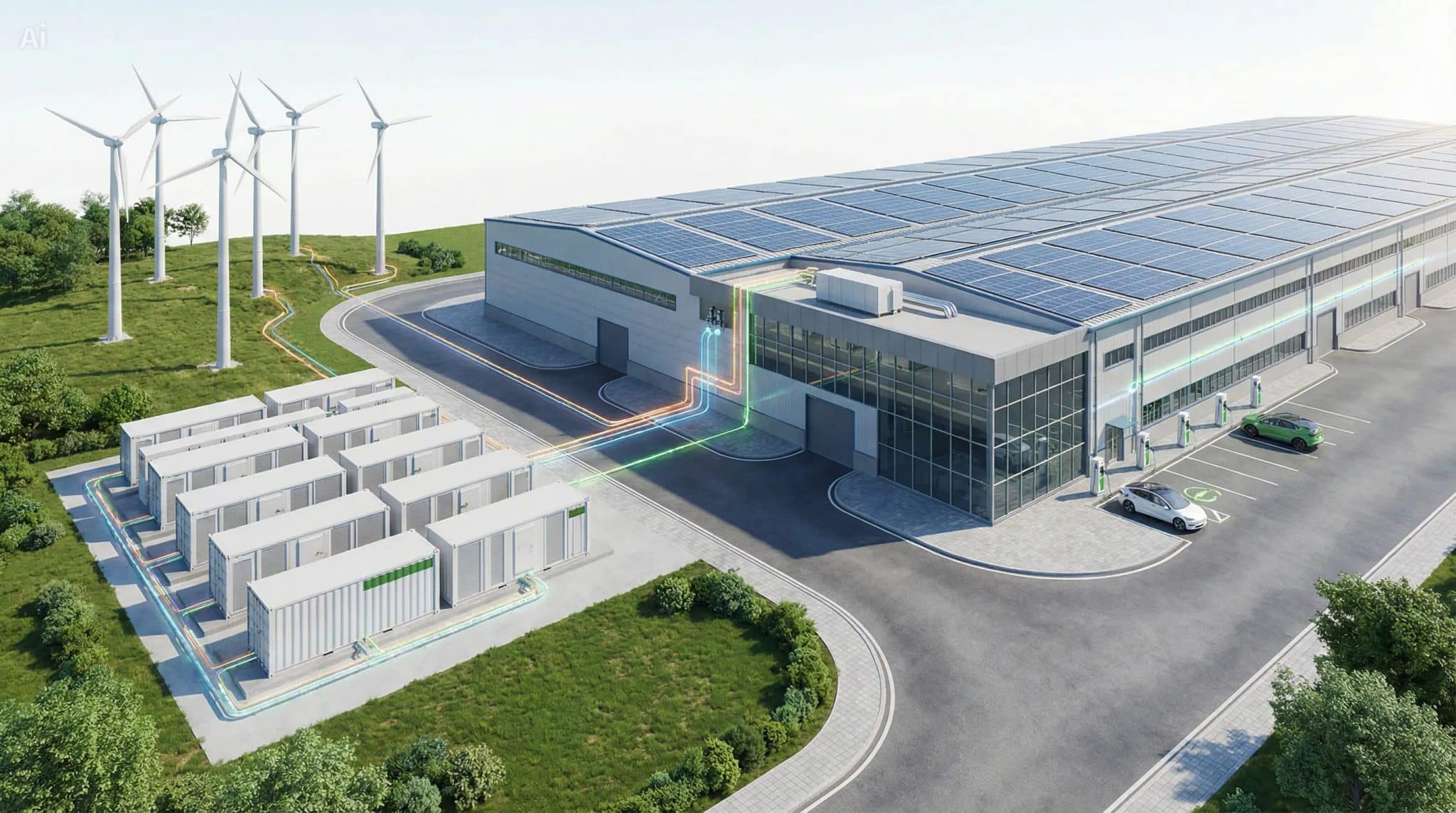
The development of industrial self‑consumption, especially in combination with storage systems, has evolved from a savings‑oriented tool into a strategic lever. The integration of photovoltaic energy production and batteries allows maximisation of self‑production use, decisions on when to consume or store, and shifting demand according to market conditions. In this context, active energy management becomes central to business decision‑making.
Low‑price windows: opportunity or risk
The growing penetration of renewable energies, particularly solar photovoltaic energy, is leading to an increasing number of hours with very low or even negative prices in markets such as Spain. These low‑price windows represent a significant opportunity for industry, as they allow adjustment of production processes, electrification of consumption and reduction of marginal production costs. However, taking advantage of these opportunities requires analytical and operational capabilities; without them, many of these advantages go unnoticed.
PPA: stability, yes, but with strategic design
In this environment, PPA contracts remain a key tool, although their design has become more complex and strategic. Beyond fixing a price, it is necessary to adapt these contracts to the consumption profile, incorporate market scenarios and design hybrid structures that combine stability and flexibility. A poorly structured contract can limit the ability to capture opportunities, whereas a well‑designed one can become a significant competitive advantage.
Active demand management: the new operational standard
Demand management is becoming a new operational standard in industry. Electrification implies not only replacing fossil fuels, but also introducing flexibility into production processes. Adjusting processes to price signals, optimising production schedules and participating in demand response mechanisms enable companies to move from a reactive position to active interaction with the electricity market.
Risk as a central variable
In a highly volatile context, energy risk becomes a central factor. Not managing it means implicitly assuming it. Therefore, hedging strategies, including PPA, forward markets and hybrid structures, are essential to protect margins, avoid exposure to extreme events and provide financial predictability. These decisions must be based on a long‑term vision, avoiding reliance solely on short‑term market signals.
The real challenge: making decisions with a long‑term vision
The main challenge for companies is not technological, but analytical and strategic. Making energy decisions in the current environment requires understanding future price evolution, evaluating probabilistic scenarios and avoiding simplifications that may distort market reality. In complex systems, simplistic decisions often lead to high costs.
Beyond consumption: energy intelligence
In this context, energy intelligence becomes the differentiating factor. The companies that will lead the market are those capable of anticipating trends, optimising purchasing and hedging decisions, integrating self‑consumption, storage and flexibility, and managing risk in a structured way.
Competing in the energy market as a new modus vivendi
Energy has ceased to be a passive input and has become a strategic vector that directly impacts industrial competitiveness. The advantage no longer lies solely in efficiency, but in the ability to manage energy, risk and the timing of each decision with precision. Ultimately, it is not about consuming electricity, but about competing in an increasingly demanding energy market.
AleaSoft Energy Forecasting’s forecasts and analysis on energy markets and storage in Europe
In a context of high volatility and increasing penetration of renewable energies, price forecasting and scenario analysis are essential for decision‑making. AleaSoft Energy Forecasting offers solutions based on statistical models and Artificial Intelligence techniques that enable anticipation of electricity market evolution.
Its short-, mid- and long‑term forecasts are key for the design of PPA contracts, the valuation of self‑consumption and storage projects, and the definition of hedging strategies. In addition, AleaSoft provides advisory services in energy risk management, helping companies to improve their competitiveness through data‑driven decisions with a long‑term vision.
Source: AleaSoft Energy Forecasting.