


AleaSoft Energy Forecasting, August 27, 2026. Since 2019, AleaSoft Energy Forecasting has been publishing regular analysis on electricity markets, renewables and the sector’s major changes in El Periódico de la Energía. This 800th publication is an opportunity to look back and see just how much the energy sector has changed in barely seven years.
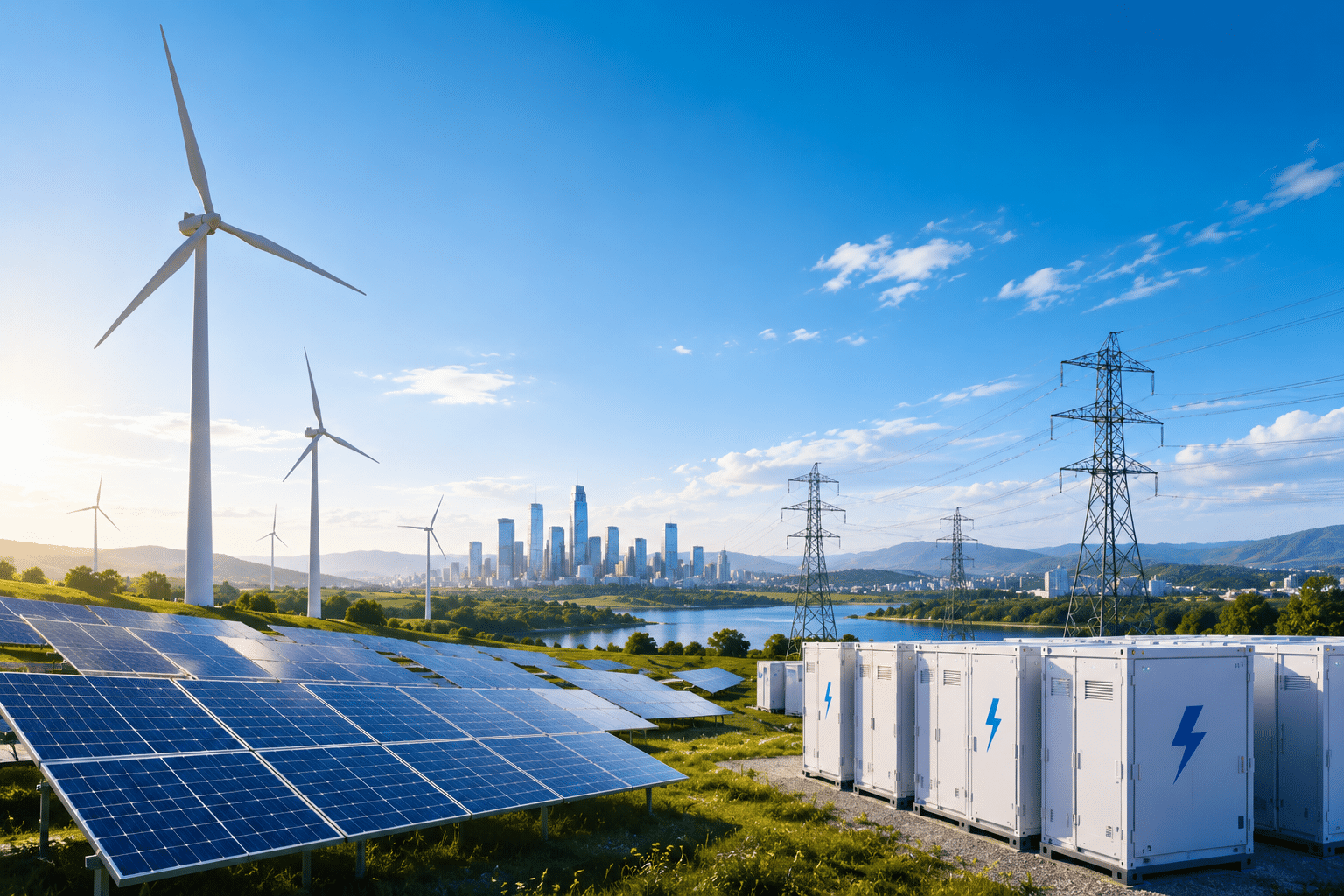
Eight hundred articles is a lot of articles. But what is truly extraordinary is not the number. It is everything that happened while they were being written. Since 2019, AleaSoft Energy Forecasting has published in El Periódico de la Energía practically every week and, in many periods, several times a week. Over these seven years, the company has analysed, with data and from a markets perspective, some of the most important events the energy sector has experienced in Europe.
The accelerated expansion of photovoltaic and wind energy. The pandemic. The collapse in demand and prices in 2020. The gas crisis. The Russian invasion of Ukraine. Electricity prices above €200/MWh. The subsequent proliferation of hours with zero and negative prices. PPAs. Curtailments. Batteries. Financing. Grids. The recovery in demand. And, more recently, artificial intelligence applied to an increasingly complex system.
Seen together today, those 800 publications form a small chronicle of one of the periods of greatest transformation in the recent history of the energy sector. And that chronicle would not make sense without El Periódico de la Energía.
A collaboration that goes far beyond 800 articles
When AleaSoft Energy Forecasting began publishing regularly in El Periódico de la Energía in 2019, the outlet was already an information benchmark for sector professionals in Spain and had a growing audience in Latin America. Over these years, that position has become firmly established alongside a radical transformation of the sector itself.
Energy has gone from occupying a relatively specialised space in economic news to sitting at the centre of some of the main European debates: industrial competitiveness, inflation, geopolitics, climate change, security of supply, investment, technological development and strategic autonomy.
El Periódico de la Energía has followed that transformation, explaining a sector that has become extraordinarily complex on a daily basis. And that has been precisely the setting in which this collaboration has developed.
For AleaSoft, having a specialised outlet with an audience of professionals, companies, investors, institutions and people interested in the sector has allowed something particularly important: bringing often highly technical questions out of the world of modelling and markets. For example, how the electricity price is formed. Why market prices rise or fall. What factors determine the value of a renewable plant. What role a price forecast plays in financing. Why negative prices appear. What price cannibalisation means. How a battery makes money. Why an investment can be profitable and yet not bankable. Or why growth in demand and grids matters as much as continuing to install renewables.
The collaboration has not been limited to these 800 articles either. El Periódico de la Energía has been covering the conclusions of AleaSoft’s monthly webinars, which started at the end of 2019 and have, over these years, brought together banks, consultancies, sector associations, energy companies, large consumers, developers and investors.
The 800 articles include interviews with members of the AleaSoft team, analysis of exceptional market situations, periodic reviews of the European energy markets, and the conclusions of numerous events dedicated to renewables, storage, PPAs and financing.
In a way, the two activities have complemented each other. An outlet needs analysis, data and viewpoints to explain what is happening in an extremely dynamic sector. And a company dedicated to forecasting and market analysis needs spaces where that knowledge can reach decision-makers. The 800 publications are probably the most visible expression of that relationship.
2019: when photovoltaic and self-consumption were the words of the moment
Going back to the first articles shows just how much the sector has changed. In July 2019 AleaSoft was writing that photovoltaic and self-consumption were two of the sector’s most repeated words. Spain was at the start of a new stage of renewable development.
The fall in costs for photovoltaic and wind energy had completely changed the economics of these technologies. Renewable development was starting to rely increasingly on market signals and PPA contracts, rather than exclusively on regulatory support mechanisms.
The questions back then were quite different from today’s: How much would photovoltaic grow? How far could its costs fall? How would new plants be financed? What role would PPAs play? Could renewables compete directly in the electricity market?
Seven years on, many of those questions have been answered. But the success of renewables has also created new challenges.
2020: a pandemic nobody had foreseen
March 2020 brought one of those events that are a reminder that forecasting does not mean guessing. The COVID-19 pandemic paralysed a large part of European economic activity. Electricity demand fell sharply. Oil, gas, CO2 emission allowances and electricity prices all fell at the same time.
Over those months, AleaSoft analysed weekly, in El Periódico de la Energía, a situation with no recent precedent. It was, in a way, a huge involuntary experiment in how markets work: what happens when a significant share of energy demand disappears within a few weeks.
It was also an important lesson about the very nature of forecasting. No model could have included a global pandemic that shut down factories, airports, offices and shops at once as part of its central scenario. But a good forecast is not just about getting one number right. It is about having the models, scenarios and understanding of the fundamentals needed to quickly grasp what has changed and what its consequences might be.
2021 and 2022: from the lowest point to the highest
Then came the opposite movement. During 2021, gas prices began to climb. The recovery in demand after the pandemic, international tensions in the fuel markets, and later the Russian invasion of Ukraine, pushed the European energy system into an exceptional situation.
In 2022, gas reached prices that would have seemed practically impossible just a few years earlier. The electricity market followed that escalation. Average annual prices exceeded €200/MWh in numerous European markets. In barely two years, Europe went from worrying about extraordinarily low prices to asking how to protect consumers and industry from extraordinarily high ones.
The so-called Iberian exception, gas reserves, LNG imports, flows from Russia, interconnections, energy dependence and the reform of the electricity market design became daily headlines.
Energy markets stopped being a purely sector-specific issue. They entered cabinet meetings, central banks, boardrooms and the conversations of millions of households.
It was probably one of the clearest demonstrations, across these 800 articles, that the electricity market cannot be analysed in isolation. Gas, CO2, demand, renewables, nuclear, hydro, interconnections and weather form a deeply interrelated system.
And after record prices came negative prices
The next transformation seemed like a paradox. Shortly after Europe had lived through the biggest price crisis in its recent history, hours with very low, zero and negative prices began to multiply. But both phenomena have an explanation.
The 2022 crisis was driven mainly by extraordinarily high gas prices. The growing appearance of negative prices, by contrast, reflects the success of the renewable rollout, especially photovoltaic. At certain hours, there is so much low-cost generation that supply comfortably exceeds available demand.
Negative prices do not mean there is too much renewable capacity. They mean the system has not yet transformed enough to integrate it. Generation moved faster than other elements that are now essential: demand, storage, grids, interconnections and flexibility.
From the challenge of installing renewables to the challenge of integrating them
This is perhaps one of the biggest conceptual shifts AleaSoft has tracked in El Periódico de la Energía. In an earlier stage, the energy transition could largely be measured in megawatts of renewables installed. The more, the better. That indicator is still important, but it is no longer enough.
In a system with high renewable penetration, what matters is when electricity is produced, where it is produced, when there is demand to consume it, and what capacity exists to shift it in time.
The value of a megawatt can no longer be assessed solely by the annual energy it produces. Its hourly profile, its captured price, its hybridisation potential and its interaction with the rest of the system also need to be assessed.
It is a huge shift. It means moving from a transition focused mainly on building generation to one in which a whole system has to be built.
Batteries move from promise to necessary infrastructure
That is where one of the leading players in the most recent articles comes in: energy storage. A few years ago, talking about batteries in the electricity system largely meant talking about the future.
Today, the conversation is about real projects and real financing, along with spreads, arbitrage, day-ahead and intraday markets, balancing services, capacity markets, revenue stacking, degradation, hybridisation, tolling agreements and merchant financing.
The question is no longer whether there will be batteries. The question is which batteries will make economic sense, what their revenue sources will be, and which projects can be financed. That gap between theoretical profitability and a financeable project will be one of the major themes of the coming years.
From profitability to bankability
The conversation has also evolved notably here. For years, a large part of renewable project analysis focused on demonstrating expected profitability. But in an energy transition that needs to mobilise huge amounts of capital, a second question arises: is it bankable?
It is not quite the same thing. An asset can show an attractive expected return in a financial model and still not provide enough revenue visibility to support the required financing.
This explains the growing importance of long-term price forecasts, probabilistic distributions, PPAs, hedges, revenue stabilisation contracts and the combination of different revenue sources.
Forecasts have thus gone from being purely market analysis tools to forming part of the financial infrastructure needed to develop the energy transition.
Generation, demand, grids and storage: the four pieces need to move forward together
Another lesson from these years is that no technology can be analysed in isolation. Spain and Europe need to keep increasing renewable generation. But they also need much more electricity demand at the same time: industrial electrification, electric vehicles, heat pumps, data centres, renewable hydrogen production and its derivatives, and new electrified industrial processes.
They also need grids capable of connecting that new generation and that new demand. And they need storage to shift electricity from the hours when there is a surplus to those when it has more value.
Generation, demand, grids and storage increasingly form a single problem. If one of these four pieces moves much faster than the others, imbalances appear, such as curtailments, negative prices, congestion, projects that cannot secure a grid connection, demand that cannot connect, or investments that stop being attractive.
The next phase of the energy transition will be precisely about getting all these pieces to evolve in a coordinated way.
Artificial intelligence, 27 years on
There is also a topic that connects the future in a particular way with AleaSoft’s origins. Artificial intelligence.
When AleaSoft began developing models to forecast electricity demand and prices 27 years ago, neural networks were a technology known in academic and specialist circles, but they were extraordinarily far from today’s public prominence.
Today, artificial intelligence is at the centre of a global technological revolution. Computing capacity has grown enormously. The amount of available data is vastly greater. And models can tackle problems that seemed out of reach only a few years ago.
But these years of forecasting work have demonstrated something. More data and more powerful models do not remove the need to understand the problem. Forecasting the electricity price still requires understanding how weather, demand, generation, fuels, CO2, interconnections, storage, regulation and market participant behaviour interact.
Artificial intelligence can multiply analytical capacity. But sector knowledge is still what allows the right questions to be asked. And that combination of knowledge, data, models and artificial intelligence will probably be one of the major drivers of the next stage.
800 articles and the same question
Across these 800 publications, the topics have included electricity, gas, oil, CO2, photovoltaic, wind, hydro, nuclear, self-consumption, hydrogen, storage, PPAs, demand, interconnections, grids, financing and artificial intelligence. The protagonists have changed. But behind practically every article there has been the same question: what is happening today, and what does it mean for the future?
That question sums up both journalistic analysis and forecasting work fairly well. An article tries to put events in order, separate signal from noise and explain why something is happening. A forecast starts from that understanding of the present to build coherent scenarios for the future.
That may be why the collaboration between El Periódico de la Energía and AleaSoft has continued for these seven years. From different positions, they share the need to try to understand a sector that is constantly changing.
Article 800 is not a finishing line
This 800th publication is also an occasion for AleaSoft to say thank you. To El Periódico de la Energía and its whole team, for seven years of collaboration, for their trust, and for having continually opened their pages to AleaSoft’s analysis. And to everyone at AleaSoft who, over these years, has gathered data, built models, prepared charts, analysed markets, reviewed texts and taken part in putting together each publication.
Eight hundred articles mean eight hundred occasions to stop, look at the data and try to understand what was happening. But it is even more interesting to think about the next 800.
The electricity system seven years from now will be very different from today’s. There will be far more solar and wind generation. There will be thousands of megawatts of batteries. Electricity demand will have to grow significantly. Grids and interconnections will become even more strategic. Financing will become increasingly sophisticated.
Forecasts will need to represent markets with new dynamics and new sources of flexibility. And artificial intelligence will transform both analysis tools and many decision-making processes.
There will be events that cannot be imagined today, as happened with the pandemic. There will be moments of extraordinarily high prices and moments of extraordinarily low prices. New technologies, new regulations and probably new problems that are not yet known today will emerge.
And it will still be necessary to do the same thing AleaSoft has done throughout these first 800 articles: look at the data, understand the fundamentals, explain what is happening and try to anticipate what comes next.
Long-term electricity market price forecasts to anticipate the future
Faced with uncertainty over the future evolution of energy prices, long-term forecasts from AleaSoft Energy Forecasting help developers, producers, large consumers, retailers, investment funds and financial institutions make decisions with a well-founded view of the market. Price curves and scenarios make it possible to assess the profitability and financing of renewable projects, value assets and portfolios, negotiate and close PPAs, define hedging and risk management strategies, and support long-term investment and trading decisions, providing a robust reference to reduce uncertainty and anticipate different market scenarios.
Source: AleaSoft Energy Forecasting