


AleaSoft Energy Forecasting, July 28, 2026. Over the past few years, the development of renewable hydrogen in Europe has been measured mainly through targets, investment announcements and projects at the planning stage. Signs are now starting to appear that the green hydrogen sector is entering a new phase, the construction of large facilities linked to specific industrial consumers.
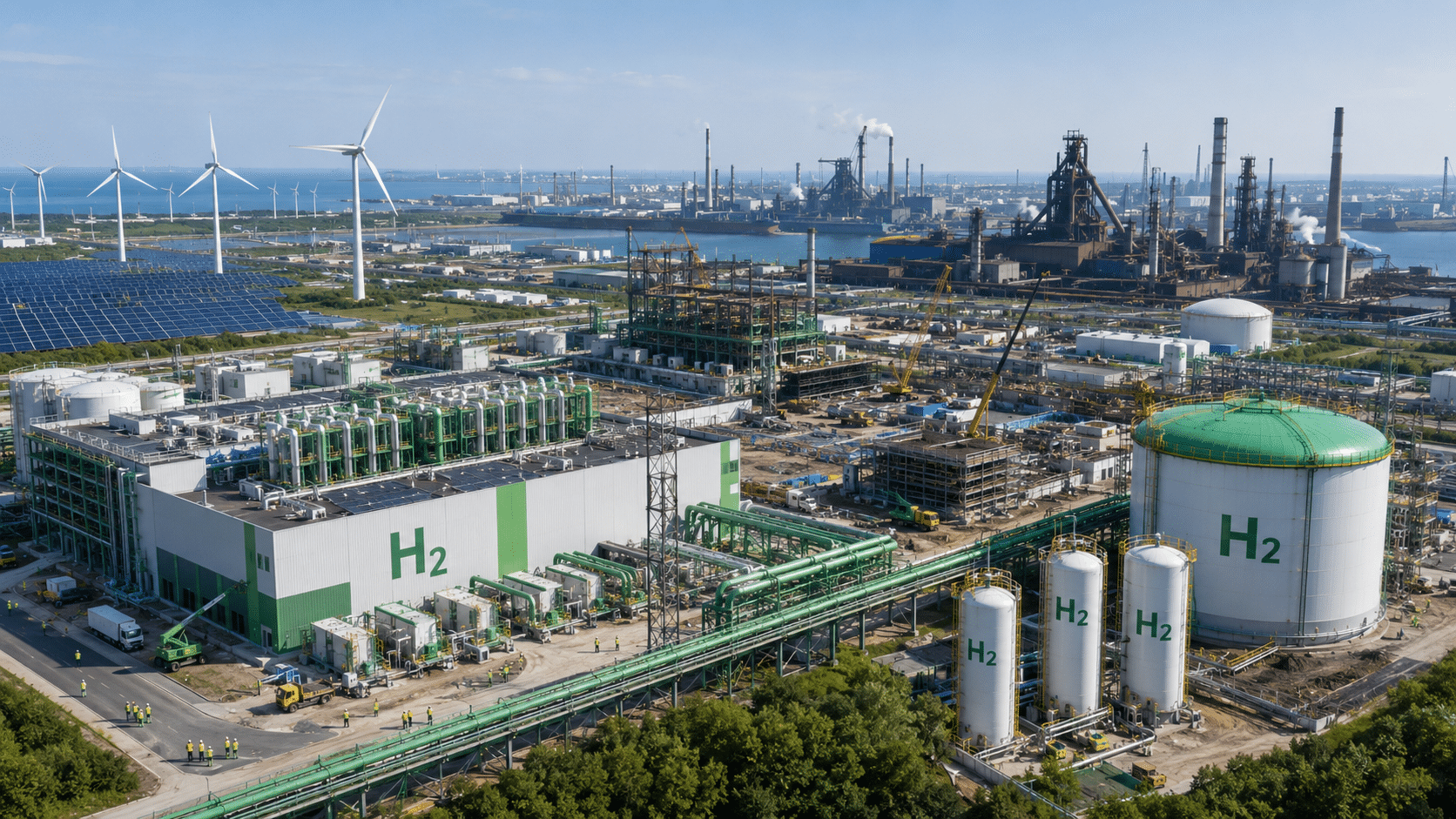
Twelve European megaprojects already under construction
Twelve of the leading European renewable hydrogen projects are already under construction. Together, they add up to around 3 GW of electrolysis capacity and mobilise an estimated investment of €13 billion. The projects are spread across Sweden, Spain, Germany, the Netherlands, France, Austria and Portugal and target sectors such as steelmaking, refining, the chemical industry, ammonia, e‑methanol and sustainable aviation fuels.
The shift from planning to construction marks an important step forward. However, building electrolysers is only the beginning. The real challenge will be getting these facilities to produce green hydrogen competitively, maintain an adequate utilisation level and secure buyers able to take on long‑term commitments.
Projects integrated into industrial complexes, not standalone facilities
The projects with the best chances of moving forward are precisely those not conceived as standalone facilities. They tend to be integrated into industrial complexes, close to existing consumers and linked to the production of steel, fuels, fertilisers or chemical products.
The Stegra project in Sweden combines a 700 MW electrolyser with renewable generation and a steel plant. In Spain, the first phase of the Moeve Onuba project in Huelva will feature 300 MW of electrolysis, while Petronor’s Green Hydrogen Hub envisages 100 MW aimed at the industrial fabric around Bilbao. In other European markets, projects are connected to refineries, hydrogen networks and underground storage facilities.
This integration reduces one of the main risks of renewable hydrogen, building production capacity without sufficiently defined demand. A project needs to know who will buy the hydrogen, for how long, in what quantities and under what price conditions.
Regulation starts to generate new demand signals
Regulation is also starting to create new demand signals. In Spain, Royal Decree 611/2026 establishes a new framework to drive the decarbonisation of transport and the use of renewable fuels, including renewable fuels of non-biological origin. The regulation introduces targets and obligations for non‑electrified road, maritime and rail transport, alongside mechanisms to encourage electrification and new fuels.
However, the existence of regulatory targets or public support does not, on its own, guarantee project viability. Production costs will continue to depend largely on the price of electricity, the number of operating hours, the efficiency of the electrolyser and the electricity supply contracting strategy.
Operational flexibility, a key competitiveness factor
An electrolyser can take advantage of the hours with the highest renewable production and the lowest electricity market prices, but its operation cannot rely solely on consuming electricity when the price is at its lowest. It must also meet its supply contracts, pay off the investment and coordinate with the industrial processes that depend on the hydrogen.
For this reason, operational flexibility will be one of the main competitiveness factors. Forecasts of electricity market prices, renewable production and demand will make it possible to decide when to produce, how much to store and how to combine long-term contracts with market purchases.
Measuring success beyond installed gigawatts
The construction of these first megaprojects shows that renewable hydrogen is starting to leave the purely conceptual phase behind. The next stage will need to focus on consolidating demand, reducing costs, developing infrastructure and structuring contracts that make it possible to finance new investments.
The success of the sector should not be measured solely by the gigawatts announced or installed. It must also be assessed by the tonnes of hydrogen produced and sold, actual operating hours, the emissions reduction achieved and the ability to improve the competitiveness of European industry.
Bankable forecasts to reduce investment risk, the role of AleaGreen
The construction of these projects mobilises billions of euros and depends on electricity supply contracts and long-term hydrogen purchase commitments, which makes the bankability of forecasts a requirement for accessing financing. Banks, investment funds and developers need electricity market price forecasting scenarios, along with electrolysis and decarbonisation scenarios, that provide the robustness needed for financial institutions’ risk analysis and underpin the revenue structure of each facility throughout its operating life.
AleaGreen, the division of AleaSoft Energy Forecasting specialising in long-term forecasts, produces bankable forecasts of electricity market prices and energy transition scenarios that allow developers, banks and funds to assess the profitability and risk of renewable hydrogen projects, structure electricity supply contracts and support the financing of renewable energy projects with criteria recognised by financing institutions.
Source: AleaSoft Energy Forecasting